Learn From Utilities Like Yours
Every utility faces unique challenges, but no one has to solve them alone. Explore customer stories, practical guides, webinars, and industry insights that share real experiences, proven approaches, and ideas you can put into practice.



Never Miss a Thing
Stay up to date with the latest industry news by subscribing to the Klir newsletter.
Featured
The latest customer stories, guides, and insights from across the water industry.

.svg)
.svg)
All Resources
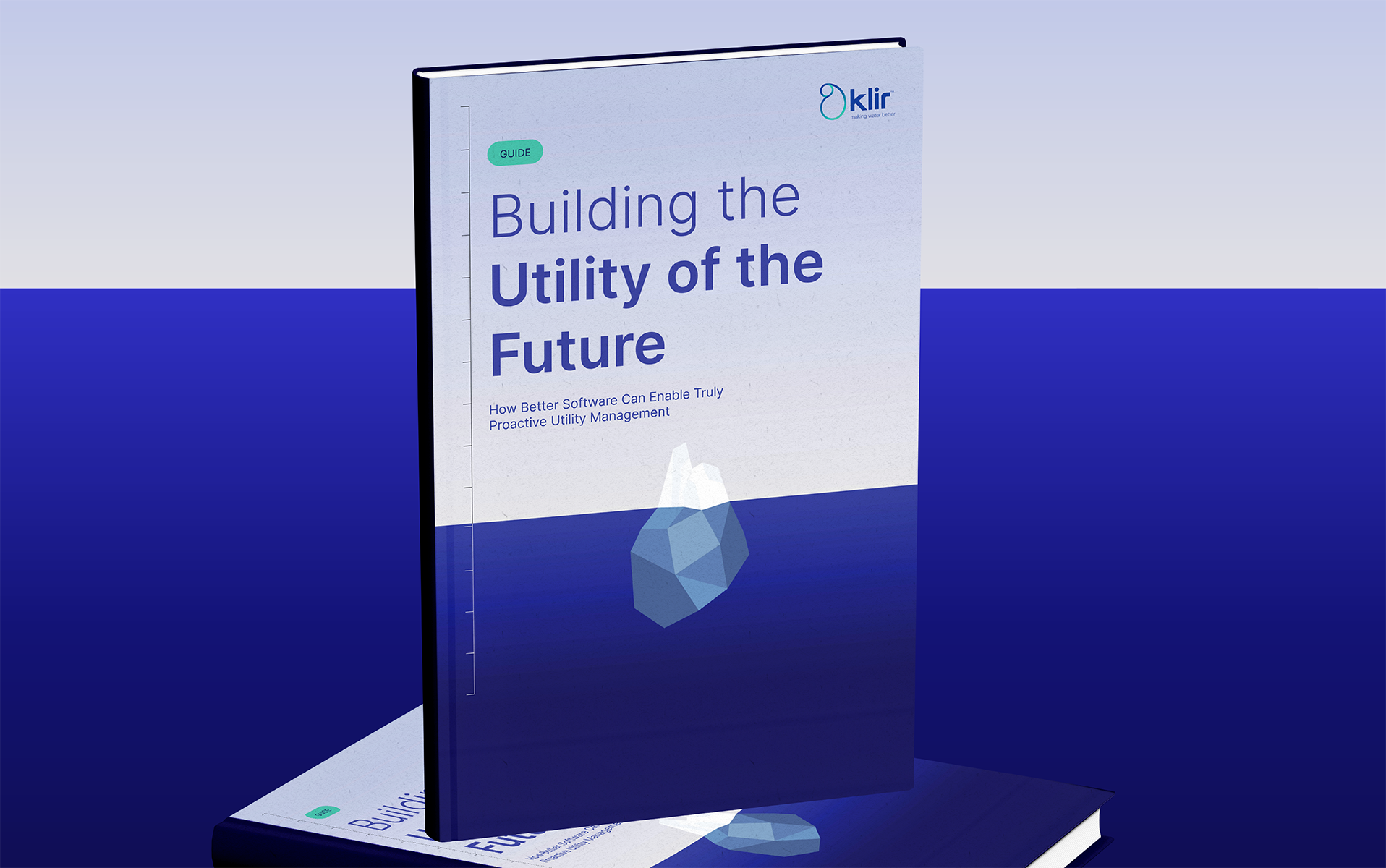
Building the Utility of the Future
Executive Summary
Digitization holds a lot of promise for the future of water, but it also poses a challenge for administrators managing the flood of data coming out of our drinking and wastewater systems.
Spreadsheet overload, ‘too many apps’ and uneven digitization are a big problem, particularly for compliance managers tracking increasingly complicated regulations. Wrangling that data into a workable system is the most important step utilities can take to realize their 20-year digital strategies.
This report builds on interviews with dozens of employees at ten water utilities in the United States, Canada and Australia ranging in size from 20 to 1,000 employees. The utilities did not sponsor the report or pay for inclusion—they were selected because they represent compelling case studies for how software can drive utility management forward.
Showing how getting the ‘basics’ of data management right can unlock previously unrealized operational powers, we look at how organizations like DC Water are leveraging sound data practices to overcome administrative paralysis and build the utility of the future.
Finally, we survey the next 20 years of water utility management, which promises to be shaped by everything from wastewater surveillance, to PFAS, to biosolids, to direct potable reuse (DPR)—each of which will only make getting compliance data under control more important to securing the future of water.
Foreword
As someone at the forefront of moving the needle on the future of water, I’m so excited and encouraged by the perspective and findings surfaced in ‘Building the Utility of the Future.’
There’s an enormous opportunity in our industry for community building and developing a shared understanding of the challenges our sector will face over the next 20 years. I call it an ‘opportunity’ because communicating our goals to groups outside of the water industry—particularly the legislators responsible for funding and signing the future of water into law—is a missing link that is the critical catalyst for change.
We can talk about green infrastructure, business development, and public private partnerships, and bathe ourselves in greenwashing. But until we find ways to communicate our challenges and criteria for success in a way that’s compelling and easy for policymakers to understand, that momentum is not going to happen. Until we clearly articulate the insights powered by integrated data, our sector simply won’t be able to secure the funding and goodwill needed to deploy these technologies on a large scale.
Service providers like Klir are the lynchpin of the solution here, because technology is only one leg of the stool—managing the change of people & process in this new way of working is the prerequisite for success.
It’s not that we are short on data as an industry, rather short of the right access to the right data at the right time with the right volume and quality. Only then can we turn up the heat to articulately demand what is needed to fix the wicked challenges facing water and run a successful utility over the next 20 years.
As it stands now, our industry is fragmented, few of us have a clear and compelling vision for modernization beyond engineering schematics, and most leaders are focused on technical challenges with little appetite for salesmanship or storytelling. We need to be able to connect the dots, legislate certain outcomes, and commit to making decisions about our capital infrastructure for the fiscal year based on sound data.
Cementing these standards will be impossible without a shared understanding of what our utilities must look like in the future. ‘Building the Utility of the Future’ is a crucial step towards that goal, shedding light on the various data management tools and strategies that the world’s largest utilities are using to bring water into the 21st century.
Section 1: Why Compliance Is the Ideal Starting Point for Digital Transformation
Software and the internet have transformed the way we work. Even smaller rural water utilities that lack sophisticated IT systems now use digital tools to communicate, manage tasks and report sampling results to regulators.

There’s just one problem: while other sectors have forged ahead and embraced purpose-built solutions, water utilities have been slow to adopt. It can take decades before a proven technology is considered “mainstream” enough, forcing staff to come up with their own solutions and leading to uneven digitization.
Before Denver Water underwent an IT audit and consolidation six years ago, Chief Operations and Maintenance Officer Tom Roode says the utility had struggled with “too many” point software solutions popping up across the organization for decades.
“For example, Maximo: it got started in one area, say our trades shop, or one treatment plant. And then over a 20 year period people would adopt it at a different treatment plant, or in the pump stations, and it kind of organically grew.”
This “organic” approach to choosing work or asset management software can create problems, especially when the solution your trades shop picks (Maximo) is different from the one your IT department and fleet staff pick (Workfront).
For Compliance Managers who rely on data from virtually every other department to do their jobs, the resulting patchwork of tools is particularly frustrating to work with—worse, even, than the piles of paper that used to clutter their desks.
But there’s a silver lining to the fact that so much data is piling up in our compliance departments: it also makes them the perfect entry point for real, strategic digital transformation initiatives.

Fighting Administrative Paralysis
As new criteria and guidance are constantly revised around issues like PFAS and LSLs, compliance managers find themselves sifting through more data than ever before.
Lacking a dedicated system to manage all of the deadlines, tasks and data her staff were responsible for, one Compliance Manager we spoke with at a mid-sized California utility took matters into her own hands and built an elaborate Excel “cheat sheet”—a monumental task at an organization that had more than 300 construction projects on the go at the time.
Cheat sheets are a popular stopgap at water utilities today, but using a spreadsheet as a database is time consuming, creates a silo around the individual responsible for it, and can be outright dangerous if anything ever slips through the cracks.
“It’s so hard being just one person with all the knowledge,” the Compliance Manager said. “Every project is different because they have different needs. Each project was trying to do it on their own, [but] they didn’t know regulatory compliance. There were knowledge-sharing gaps between departments.”

Data Icebergs
While it’s popular to blame silos, the iceberg might offer an even better analogy for what’s going on at utilities today.
Some crucial data might be visible at the surface, but a vast majority of the most valuable information is below the water line, hidden from view and ready to cause problems.
Icebergs aren’t limited to large organizations either. General Manager Piret Harmon, who manages a team of about 20 people at the Scotts Valley Water District (SVWD), which serves 10,700 customers across 4,200 service connections, routinely finds herself frustrated by data icebergs.
“The water consumption data is here, the water billing data is here, the production data is here, and water quality data is here. And every week there’s another report due, and it’s up to me or another person to sit down again and sort through it all. It’s a very manual process.”
At a large utility responsible for thousands of different permits, that can leave Compliance Managers overloaded by paperwork and constantly firefighting. Any single data point might be buried in:
- Spreadsheets, created by individual personnel and saved locally on their computers
- Outdated printouts kept on file
- Emails saved in an individual’s inbox
- Handwritten log sheets kept onsite
- Customer information systems
“I just couldn’t put my arms all around it, especially at the beginning of the year when it gets busy with permit renewals,” said another Compliance Manager we spoke to.
“I’d have to let our lab managers know, ‘Hey, sorry, my bad. I usually give you two weeks’ notice that I need this data, but I need it tomorrow.’”

#1 Moving Towards Self-Service
Utility customers and workers alike already live in a world filled with internet-enabled self-serve platforms—to consume their media, communicate with colleagues, and order groceries.
As Piret Harmon from SVWD points out, utilities are under increasing pressure to build experiences that are as easy to use and intuitive as the ones we encounter when ordering toilet paper on our smartphones.
“We are trying to actually empower our customers to get more things done without us. For example, why do people have to call us so we can find a piece of paper for them? Why can’t it be like, ‘no, go and browse for it yourself?’”
#2 Bracing for the ‘Gray Tsunami’
Water utilities across North America face huge personnel crises as a generation of experienced workers prepare for retirement, with institutional knowledge walking out the door with them.
As workers prepare to retire, it’s more important than ever for utilities to document processes and institutional knowledge so new employees can train for the job properly.
“I’ve got people about to retire, and also recent college grads. I’ve somehow gotta get these people ready for very technical positions very quickly,” one Compliance Manager told us.
#3 Getting New Infrastructure Funded and Built
The less time a compliance department spends chasing down regulatory information, the more time they have to serve internal customers and help them usher large-scale projects through complicated regulatory processes.
“[I want to] be able to better serve our other customers, like Engineering. Having more time to support them as they navigate complicated, sometimes confusing regulations would make their jobs so much easier,” said one Compliance Manager.
“If we could free up some of our time, that would allow us to give them the consultation that they need to navigate new permits for new projects. We could be a better service and have more time to help them navigate all of those regulations.”
#4 Responding to Water Quality Issues Quickly and Building Trust
When customers’ water quality is threatened and regulatory bodies are demanding up-to-date information, time is of the essence.
“We’re just beginning to dive into the world of letting customers report with web mapping applications,” says Adam McKnight, a former analyst with Halifax Water.
In the event of a water main break, rather than solely relying on calls from customers, McKnight’s department has given residents the ability to file their own reports online. It’s faster and more efficient than before.
“They pin the dropper point on the map, and we can go out and we can investigate,” says McKnight. “That becomes a part of our water main break response. That’s one emergency situation where it’s really beneficial having all the data right there.”
#5 Bringing Utility Management Into the 21st Century
Overstretched Compliance Managers might have it the worst when it comes to administrative overload, but important data is pooling across every department.
A single large wastewater treatment plant (0.8-3 million population served) can generate upwards of 30,000 data points, most of which pile up in data graveyards: employee hard drives, OneDrive, the utility’s servers, etc.
When managers look out across their organizations today, they see the tops of numerous icebergs with no way of knowing what’s underneath.
To move forward with some of the more exciting innovations in water technology like AI and predictive analytics, large utilities will need to do the hard work of taming these icebergs with a sound data management strategy. And developing objective metrics for utility performance will be crucial as utilities approach state and federal governments for more funding.
Section 2: From Asset to Event Management: Turning Software Into an Essential Operations and Maintenance Tool
Operations and maintenance leaders at water utilities are faced with a seemingly impossible task: maintain massive, complex and at times century-old drinking, waste and stormwater infrastructure, often with limited resources and a shoestring budget.
In many cases infrastructure is breaking down faster than it’s being renewed, while economic and population growth puts further stress on existing systems, leading to frustrating situations for utility leaders.
As Piret Harmon from SVWD puts it, “Why are you building if you’re asking me to conserve? How is that even in the same sentence?”
With a problem so deeply rooted in physical infrastructure and engineering challenges, taming a utility’s data might not be the first solution that comes to the minds of utility leaders.
That is until you look at the way leading utilities like DC Water are managing their data—not just to cut down on administrative work, but to make the job of the operator easier, drive real change in their physical systems, and anticipate and fix asset risks before they become asset disasters.
The Typical Utility ‘Stack’
In addition to operating one of the world’s most advanced wastewater treatment plants at Blue Plains, DC Water has made significant strides in bringing all of their work into the digital sphere properly.
The utility has methodically built and adopted systems to help it decrease administrative workload, create processes that are more self-serve, and lay the groundwork for more sophisticated technologies like predictive analytics.
Like many similarly-sized utilities, DC Water sorts its systems into three general buckets:
- Its Core Underlying Systems that manage assets and track internal work using IBM Maximo and ArcGIS, as well as payroll and finance which is handled by Oracle.
- Its Customer Information Systems, through which it manages 130,000 metered connections.
- Its Third Party Portal, nicknamed the ‘Plumber Portal,’ a collection of contractor-facing applications through which the utility manages programs like Backflow Inspections and Grease Abatement.
Getting as many contractors, employees and customers plugged into and using this system has been a big priority for DC Water’s IT lead Tom Kuczynski—and a big achievement.
While DC Water’s shiny, futuristic HQO headquarters has a mailroom, it might not need one for long: 70,000 of the utility’s customers have signed up for online accounts, and about 50,000 currently receive an e-bill.
Thanks to the ‘Report a Problem’ app, customers can submit issues online even if they don’t have an online account.
Dispatching plumbers for inspections is also now an entirely digital process handled through the Plumber Portal, which automatically generates and sends work orders to Maximo.
“It’s a lot more efficient for us to manage any information, and it integrates better with our core systems. So if you need a meter installed or a service connection completed, you can send us requests that automatically generate a work order in our system,” says Kuczynski.
At-A-Glance: Utilities Featured in the Report

The Disaster Response Challenge
DC Water’s IT systems faced a new challenge in September of 2021 when Northeastern DC experienced a “microburst”—an extreme climate-change fuelled weather event concentrated in one area.
“It didn’t rain at all here [in the south], but we had six inches of rain in northeast DC that caused major flooding in the area,” recalls Kuczynski.
The utility’s 24/7 helpline and ‘Report a Problem’ apps immediately lit up as numerous customers’ homes flooded during the microburst, and DC Water’s crews had to respond quickly.
Suddenly there were three groups of people sitting in three different locations who had to work closely together:
- The pumping operations crew who sit in the pumping station right outside of HQO and run the sewer system.
- The plant workers four and a half miles away at Blue Plains WWTP, where all of the water pumped through the system eventually ends up.
- The customer service crews on the third floor of HQO who monitor the help line and dispatch crews.
Communication between the three groups became tricky when multiple work orders were generated for the same neighborhood or geographical area.
All three would have to rely on a fourth party, the foreman in that area, to know that those work orders were all related to the same problem and avoid sending multiple crews.
“We didn’t really have a comprehensive understanding of what was really happening across our physical collection system and our customer system: none of those systems talked to each other back before September. We needed a better way to manage that event in a more comprehensive way,” says Kuczynski.
Enter the Events Management System
Working with a local vendor, DC Water set out to build an application that would knit the information in its Core Systems and Customer Systems together into one seamless, real-time emergency response dashboard.
The result was the Events Management System, an award-winning dashboard-based application that gave operators sitting in the DC Water war room access to:
Real-time feeds that they can use to monitor the severity of an incident.
An incident tracking tool that integrated with the utility’s call center and customer information system.
Information about all crews and vehicles in the field, making it easier to allocate resources to an event quickly.
“This one pane of glass now gives you all of that information in a single view,” says Kuczynski. In the event of another microburst, crews could be dispatched and managed seamlessly using a single user interface.
“So they can say, ‘These five work orders and incidents can all go to one crew.’ And they circle and drag them (on screen) to create a work order. They can literally do what they did before in seconds compared to minutes.”
In an emergency situation where five new calls might come in by the time you’re done attending to one, that’s a game changer.
Proactive Utility Management in Action
DC Water’s experience with the EMS is a concrete example of how sound data management and connecting disparate data sets can unlock new levels of efficiency, responsiveness and insight at a water utility.
It shows how there’s a direct line between the less glamorous aspects of digital transformation—pushing customers to sign up for online accounts and building a reliable customer database, for example—and the more exciting, transformational technologies like the EMS.
Take Pipe Sleuth, another application DC Water built with an external vendor, which uses neural networks and advanced image processing to analyze photos of pipes to grade them based on condition and report potential pipeline defects.
Kuczynski says the ability to better predict main breaks could be a game changer for the utility, from both a service and a cost standpoint.
“You eliminate service interruptions to customers, you eliminate street closures, but you also reduce the cost of a repair—$50,000 for a small break vs. up to $1,500,000 to fix a 36- inch transmission main.”
Section 3: Using Better Data To Tackle The Resource Recovery Challenge

Getting rid of data icebergs and leveraging compliance and operational data for insights will be crucial for bringing utilities into the digital age properly. But how does better data management fit into the broader transformation that’s going on at water utilities today?
Let’s stick with the DC Water example a bit longer. Their push to squeeze every last bit of value out of every asset there hasn’t stopped with faster emergency response times.
Blue Drop, a nonprofit LLC spun out of DC Water in 2016 and lead by Kuczynski, has recently started generating revenue by renting out the utility’s headquarters for events, leasing surplus cell tower space, licensing its EMS and PipeSleuth software to other utilities, and selling a Class A biosolids fertilizer product called Bloom.
“You can’t keep raising prices, right? There gets to be a point in time where the cost of service exceeds the ability of the customers to pay. So you’ve got to figure out ways to do it better, faster, cheaper,” says Kuczinski.
It’s an unavoidable fact that most utilities are going to have to start looking for additional cost savings and sources of revenue to offset rate increases. For most, that means aggressively pursuing resource recovery: the process of extracting and recycling as much of what passes through a wastewater system as possible.
Better Biosolids With Better Data
Disposing waste sludge is an expensive process, and getting better at biosolids—by reducing the amount of biosolids that are thrown out and increasing the amount of Class A material that can be sold—is a huge cost-saving and revenue opportunity for utilities.
According to Urban Utilities General Manager of Resource Recovery Peter Donaghy, mapping out our water and wastewater systems and developing a better understanding of how they work using better data is one of the most effective methods we have to improve the biosolids process.
His team recently used real-time analytics to discover that the way effluent moves through the system’s pumping stations could affect biosolids quality. As they worked through the biosolids system with a fine-toothed comb, they realized sewer network operators could have a massive role in biosolids quality.
“As soon as we saw [a contaminant] coming in at the head of a treatment plant, there were a certain number of pump stations we could inhibit that could slow that process and give us time to react.”
By allowing the pumping station to slowly fill up, Donaghy’s team could buy themselves an hour or two to send a worker to that pump station to test it for undesirable effluent and potentially stave off contamination.
“Inhibiting a pump station is not something you’d think is part of managing biosolids, it’s way off in the network. Some of the guys managing those pump stations wouldn’t even know what biosolids are.”
Direct Potable Reuse: The ‘Holy Grail’ of Resource Recovery

While generating additional revenue from a utility’s assets and recycling biosolids waste is a step in the right direction, recycled water continues to loom on the horizon as the biggest resource recovery prize.
Less than a fraction of a percent of all of our wastewater is ‘officially’ recycled back into the drinking water system today. But cities like Atlanta, Philadelphia, New Orleans, and Washington D.C. already draw their drinking water downstream from wastewater treatment plants.
In fact, of the 32 billion gallons of wastewater discharge the U.S. produces every day, the National Research Council estimates that up to 20 billion might already be re-entering drinking sources downstream.
And as utilities in Colorado, Florida and California take concrete steps towards implementing direct potable reuse (DPR) technologies and new research suggests that treated water might be cleaner than conventional sources, recycled drinking water will play an increasingly large role in the future of water.
Take Los Angeles Sanitation’s ‘Hyperion 2035’ plan, which aims to transform its Hyperion Wastewater Treatment Plant—one of the largest in North America—into a fully DPR operation by 2035.
Hyperion is a colossal 144-acre facility, with a sprawling network of streets that officials often describe as a city unto itself. To move to DPR, close to half of the existing footprint of the plant will need to be rebuilt or overhauled in some way with a raft of technologies like microfiltration and ultrafiltration, new biological processes and reverse osmosis.
But to hear LA Sanitation officials describe it, Hyperion 2035 is just as much about new treatment technologies and engineering challenges as it is about building (and in some cases, rebuilding) trust in recycled drinking water.
DPR’s Compliance Challenge

As utilities pursue DPR, the legacy of anti-potable reuse sentiment and California’s doomed efforts to start introducing DPR in the 1990s looms large in the minds of utility leaders and regulators.
It’s clear that the margin for error with DPR will be razor-thin, and building confidence in water quality and compliance data will be more important for DPR projects than it ever was for traditional water and wastewater utilities.
“The whole issue of public confidence is that very, very fragile link that keeps the system going. That’s something we are very aware of and try very hard to maintain,” says Pierre van Rensburg, strategic executive for urban and transport planning at Windhoek, Namibia.
That city built the world’s first DPR plant in 1968, which today produces purified water for the city’s 400,000 residents. Van Rensburg says that no illness has ever been directly linked to its operations in the decades since its opening.
“I think if there is ever one incident that could be linked back to the plant, the public would lose all confidence and simply refuse to use water from that source and that would severely taint our supply options.”
Conclusion
The Future of Water is Compliance
So what does this all mean for utilities? Firstly, it confirms something we’ve suspected for a long time at Klir: that many water utilities are struggling with digitization ‘basics,’ and they won’t be able to move forward with their ambitious 20 year strategies before they get them right.
As EPA and states make big strides to tackle issues like PFAS, LSLs, drought and increasing pressure on water systems, keeping up with regulations is only going to become a more burdensome process using existing tools.
At the same time, as utilities pursue efficiencies and more ambitious resource recovery projects while recycling or reclaiming more of their water, trust in the integrity of their data is only going to become more important, not less.
So how can utilities decrease the margin of error and build trust in their data? It all comes back to those ‘basics:’ building a single source of truth for regulatory data, breaking down icebergs and building certainty around a utility’s compliance data.
Wrangling water quality and permit data into a workable system and empowering Compliance Managers with better software tools might seem like a purely administrative challenge today. But it could very well turn out to be the single most important step utilities take in their digital transformation journey.

Striving for a 'One Utility, One Platform' Approach at Halifax Water
"One of the difficulties with diving into the digital world is that you end up having an app for this, and then an app for that. The fact that Klir had so many different modules that can talk and communicate with each other was really appealing to us. Users don't have to learn eight different applications: ideally they're only going to know the SCADA system and Klir."
– Adam McKnight, Data Analyst at Halifax Regional Water Commission
As Data Analyst for the Halifax Regional Water Commission's Water Quality Programs, Adam McKnight has a privileged vantage point over Nova Scotia's largest water system.
Serving a population of more than 350,000 in the Halifax Regional Municipality, the utility manages 8 water supply plants, 14 wastewater treatment facilities and more than 1,500 kilometers of water mains in Canada’s second-fastest growing municipality, all of which must be constantly monitored for compliance through a rigorous sampling program." A lot of the time, compliance data drives our operational decision making. If we're reporting a number to a regulator, we need to make sure that we're doing what we need to do operationally to meet those targets," points out McKnight.
But getting those thousands of data points in front of the right people can be a challenge, especially when you consider the patchwork of offline and online systems that water workers like McKnight have to navigate. That’s why Halifax Water set out to transform the way it manages its water data, merging multiple data sources and processes into a single collaborative platform and paving the way for a more proactive, collaborative and resilient water data management program.
More Data, More Challenges
When Halifax Water first considered implementing Klir to manage its compliance data in 2020, it had already spent decades using software tools to transition away from paper and binder-based recordkeeping and do more with their existing data. But while compliance-specific web tools had helped Halifax Water take one step into a digital future, as the utility grew and the number of different people and departments using those tools increased, the utility’s data management system became increasingly strained. "We focused on getting drinking water data into the digital realm, then we expanded on that and incorporated wastewater compliance and sampling, then we added more research-based groups." The result was a work process that, from a data and reporting perspective, was unsustainable in a few ways:
- Sampling data remained difficult to access, living "either in physical log sheets at the treatment facilities, digital spreadsheets, or in the time series data management system that stores our SCADA data. Having data in so many locations and formats makes it really difficult to pull the data together for comparison and analysis, especially when it is needed quickly."
- Spreadsheets were being used as databases, creating data opacity and discouraging proactive data management.
- Even when users could get data in and out of the system, it wasn’t built for collaboration and often became disorganized with too many hands in the pot.
"We didn't really have a solid water quality data governance or structure. It was kind of a free for all, which led to a lot of challenges,” says McKnight.
Implementing a New Approach to Water Data Management
It became clear that Halifax Water would need to adopt a new approach to water quality data management—one that took the patchwork of tools it had depended on in the past and turned it into one truly integrated system. To do that, the utility turned to Klir, an operating system (OS) for water management that integrates compliance, sampling and all other aspects of water and wastewater data management into one integrated, centralized and easy to use system.

Presented with the opportunity to switch to Klir, McKnight says it didn’t make sense not to make the jump. “We have all of this operational data, we have all of this compliance data—it didn't make sense not to have that data be brought together. ”With the help of Klir and a renewed commitment to the One Utility, One Platform approach, Halifax Water aims to:
1. Maintain High Quality Drinking Water
Klir dovetailed with a longstanding desire at Halifax Water to do more with data and move from reactive problem solving to an approach whereby compliance personnel, operators and engineers worked proactively to mitigate drinking water and wastewater issues. "Over the last three years we’ve been trying to look at our compliance data as early as possible, especially when data is beginning to trend differently. We began by getting our compliance inspectors to send us emails when they're noticing things in the distribution systems or at treatment facilities when data is outside normal thresholds."
Klir presented McKnight’s department with the opportunity to see the bigger compliance picture, notice trends before they become problems, and make sure the right people have access to the right data at the right time. "That way, we're able to get ahead of things and maintain high quality drinking water."
2. Decrease Dependence on Individuals
The complicated routines of a water sampling program as large as Halifax Water’s will often live, to some extent, inside the desk drawer or head of a single employee. That can create problems if that information—or person—ever goes missing.
"That's a lot to put on one person,” points out McKnight. “And if that one person leaves, you're stuck."
Klir gave Halifax the ability to offload that information into a universally-accessible system, decreasing dependence on individuals and building a system that was more resilient, more secure and less prone to information loss.
3. Centralize Compliance Data and Cut Down on Data Chasing
Larger utilities like Halifax Water often struggle to maintain a single set of compliance data, which can sometimes lead to confusion or even overlapping, contradictory information about water and wastewater quality.
"Sometimes data used in reporting is calculated from a combination of compliance and operational sampling program data. However, confusion can result when datasets unintentionally referenced are not the authoritative source of the information and have become outdated. We need one single source of truth, where people know they can go to reference authoritative data at any time.”
Linking and centralizing compliance, monitoring, research, operational and other data together to create a single source of truth provides Halifax Water’s users with a new level of decision-making confidence, allowing operators and staff preparing reports to have a full and clear picture of what is actually going on in the utility.
4. Use Fewer Apps to Build a More Efficient, Secure System
It’s not uncommon today for operators, engineers and compliance professionals at large utilities to use separate tools for compliance reporting, sampling, pretreatment and FOG, backflow prevention & cross-connection control.McKnight says that can become a frustrating challenge for a utility trying to build a system that works, and is also precisely why Halifax Water chose Klir.
“The fact that Klir had so many different modules that can talk and communicate with each other was really appealing to us. Users don't have to learn eight different applications: ideally they're only going to know the SCADA system and Klir."
McKnight says that in addition to reducing the time Halifax Water spends training new users, it also allows the utility to avoid situations where someone leaves the company and takes access to and familiarity with an app with them.
“From an auditing perspective that can be a huge red flag. If you're only using a handful of applications, that's a lot easier from a security perspective."
5. Break Down Departmental Silos and Promote Collaboration
Halifax Water made a multi-year commitment to become a “One Water” operation, integrating stormwater, wastewater and drinking water into one seamless system.
“Our big objective is to break down silos and have more communication between the different business units, departments and divisions. Alongside that, internally we've also [adopted] the slogan of ‘one water, one data.’ Those two goals really go hand in hand.”
Klir has helped accelerate that transformation within Halifax Water, helping form bridges between different groups within the utility, giving all user groups easy access to water quality data, and helping decision makers at the utility get on the same page when it comes time to problem-solve.
“It only helps make us stronger, because we're going to be working together and everyone has a common goal rather than feeling like there's different groups that are working against each other."
One Water, One Data
With Klir, Halifax Water foresees making serious progress on its goals to encourage interdepartmental collaboration as a One Water utility, set the stage for further data integration in the near future, as well as:
- Adopting a proactive approach to problem solving, helping it maintain water of high quality for its customers and the environment.
- Decrease dependence on individuals, reducing the risk of information loss.
- Create a single source of truth, avoiding overlapping or contradictory reporting and streamlining the compliance process as a whole.
- Use fewer apps to build a system that is easier to use, takes less training time to master, and is better prepared from an audit and security perspective.
- Break down departmental silos and promote collaboration, allowing the utility to deliver on its One Water, One Data vision.
Bring a 'One Water' Approach to Your Utility
Klir is a single, unified operating system for water, pulling every aspect of wastewater management—including compliance, sampling and more—into an easy to use dashboard. Learn more about how Klir can cut down on administration and record-keeping work, create new opportunities for collaboration, and provide a level of system-wide visibility unmatched by other water data management systems.

How Klir Helped SCV Water Navigate Amalgamation
“I don’t think there is anything out there like Klir.”
—Keith Abercrombie, Chief Operating Officer at Santa Clarita Valley Water
At A Glance
- As SCV Water amalgamated three water divisions under one agency, Klir supported a seamless operational transition by organizing over 150 permits into a single collaborative dashboard.
- Complete visibility for management into live status of all permits has eliminated all risk associated with specific employees holding permitting information.
- With permitting tasks fully managed through Klir, no deadlines are missed.
The Challenge
In 2018, Santa Clarita Valley Water (SCV Water) was managing a massive organizational shift—amalgamating three separate water divisions into one.Among the many hurdles that Chief Operating Officer Keith Abercrombie and his team were facing: the complex task of understanding which permits were being maintained across the three divisions.With an aging workforce (80% of which is over 50) and a few key team members set to retire in the coming years, Keith and his team were driven to look for a new way to handle their permits.In the old system, everyone knew who was responsible for managing a specific permit, but a change in the overall structure meant a change in responsibilities for many employees.Each permit had requirements to fulfill for a key regulatory body, and not reporting or complying would mean that the utility could be subject to a fine or penalty—which in many cases could be quite material.Without the support of a central permitting database, and with the recent increase in permit quantity and complexity, there was simply too much risk.
The Solution
Keith and the team at SCV Water turned to Klir to pull together and help coordinate permitting information for the newly-amalgamated team.
The Klir permit management solution takes the risk of managing and complying with permits out of the individual’s hands by centralizing this information andautomating the tasks and activities needed to comply across the organization.“Klir has helped us manage and track permits and to be in a position that we are comfortable in knowing exactly what we are doing with our permits. We are not at the risk of screw ups, which can be embarrassing and costly,” says Keith.With permits across the organization now managed in Klir:
- Contributors can easily keep track of deadlines and activities with automatic triggers and alerts
- All data and requirements for 150+ permits are gathered into one permit management system
- Employees can continue to work the exact same way as before because the Klir system builds onto existing systems and processes
“Some staff, like supervisors, worry that they could miss a deadline. Having the ability for software to tee up the events in advance, and not just for the person whose responsibility it is, but for someone else in case they are out, gives us peace of mind,” says Abercrombie.
The Impact
With a single source of truth for all permits, SCV Water has:
- Eliminated the risk of having a specific employee handle all permitting information. Now, permit management will remain consistent when people retire or new people join the team.
- Automated all permit-related tasks with task scheduling and notifications sent to key employees.
- Prioritized workflows thanks to easy visibility into work on-hand, so that no deadlines are missed.
“It is a lot more than automation, it is a central database and I now know where to go to find the data I need," says Abercrombie.
How Klir can help
Klir is a single, unified operating system for water, pulling every aspect of wastewater management—including compliance, sampling and more—into an easy to use dashboard.Learn moreabout how Klir can cut down on administration and recordkeeping work, create new opportunities for collaboration, and provide a level of system-wide visibility unmatched by other water data management systems.

How Klir Helps the Southern Nevada Water Authority Take its Compliance Position to the Next Level
Serving Southern Nevada and the world famous Las Vegas strip, the Southern Nevada Water Authority provides potable water to 2.3 million residents and 40 million annual tourists.
With a mandate to be the world’s most efficient drinking water utility, the SNWA relies on Klir to be more proactive and efficient when it comes to permit and Safe Drinking Water Act compliance.
“Being in compliance is extremely important. But being able to demonstrate that in an effective and efficient way is where this tool really takes our compliance perspective to the next level,” says Dave Johnson, Deputy General Manager of Operations at the Southern Nevada Water Authority and the Las Vegas Valley Water District. “The Klir application helps us to sleep better at night knowing that we can demonstrate that compliance.”
The Challenge
As a public utility, the SNWA has no room for error when it comes to permit compliance and utility operations.
With thousands of permits spread across the organization in different departments and different divisions, and 300,000 samples required annually to comply with the Safe Drinking Water Act (SDWA), the SNWA set out to identify a technology that would allow it to bring all of its permit tracking and sampling monitoring together into one location.
“We have a big responsibility to the community, and that is to ensure a safe and secure drinking water system. Klir provides us a tool to make sure that our water is safe and secure,” says Frank Milligan, Director, Environmental Health & Safety & Corporate Security at the Southern Nevada Water Authority and the Las Vegas Valley Water District.
The Solution
- Klir provides peace of mind for management with complete visibility into the utility’s live status of compliance.
- Centralizing 1000+ regulatory permits into a single dashboard eliminates information silos.
- SNWA analyzes over 300,000 water quality samples every year. Klir provides a tool to track and manage that sampling data, allowing the SNWA to ensure its in compliance and meeting ratepayers’ expectations each day.
- With time saved on compliance admin, staff time can be redirected towards high-value proactive work.
The Impact
The Klir drinking water management platform allows SNWA to consolidate and manage all of its 1000+ permits and 300,000+ water samples in one place.
- With a single software system to consolidate all of its permits and Safe Drinking Water Act sampling outcomes, the SNWA can deliver compliance more efficiently.
- Management has complete visibility into the organization’s real-time compliance position, all within a single dashboard.
- Permits are kept current and legal with no deadlines missed.
- Staff time that would otherwise be spent on administrative tasks can be redirected to high value work such as conducting inspections, or hazard abatement action.
“The real value proposition in the Klir software is that it allows us to become much more efficient in how we deal with these massive amounts of data.”
– Dave Johnson, Deputy General Manager of Operations at SNWA and LVVWD
How Klir Can Help
Klir is a single, unified operating system for water, pulling every aspect of water management—including compliance, sampling, permitting and more—into an easy to use dashboard.
Learn more about how Klir can cut down on administration and record-keeping work, create new opportunities for collaboration, and provide system-wide visibility into your water system.

Macon Water Authority’s Compliance Makeover – From Paper to Precision
“If we needed to find something, we had to dig through thousands of pages—and if it wasn’t where it was supposed to be, we were in trouble.”
– A.J. Hopkins
After an audit flagged missing documentation, Macon turned to Klir for a centralized, digital solution.
From Paper Overload to a Digital-First Approach
For years, Macon’s compliance program relied on manual processes, making it difficult to access key documents and stay ahead of deadlines. In 2022, an audit from Georgia’s Environmental Protection Division (EPD) highlighted the risks of missing documentation. The message was clear—without a better system, they faced potential fines, which could have cost the same as a year with Klir, and compliance failures.
Macon chose Klir for its ability to centralize all compliance data, eliminate manual tracking, and provide real-time visibility into reports and deadlines. The platform offered unlimited user access, strong security protections, and the flexibility to scale beyond industrial pretreatment into drinking water and wastewater.
A Smooth Transition to Klir
Moving from binders to a digital system can seem overwhelming, but Macon’s onboarding process with Klir was structured, hands-on, and highly supported. Over six months, the Klir team worked closely with A.J. and his staff to digitize records, standardize workflows, and configure the platform to their needs.
“It felt like Klir was auditing our program from top to bottom—which turned out to be a huge benefit. We finally had clarity on everything we had and what was missing.”
– A.J. Hopkins
Despite staffing changes and unexpected extreme weather delays, the transition remained steady and manageable, giving Macon full control over the pace of implementation.
Results: More Confidence, Less Chaos
Since implementing Klir, Macon has eliminated the stress of tracking compliance manually.
Records are now searchable in seconds, removing the last-minute panic of audits. Automatic reminders ensure that deadlines are never missed. Compliance confidence, which was once shaky, jumped from a 5 out of 10 to a 9 or 10 out of 10.
“We used to lose sleep over whether we had the right information. Now, we know we’re covered.”
– A.J. Hopkins
Looking ahead, Macon is eager to take advantage of Boots, Klir’s AI-powered assistant, which will allow them to find answers instantly—without searching through spreadsheets or emails.
“If someone asks me for a report, I won’t have to dig through a binder or open 15 spreadsheets—I’ll just ask Boots.”
– A.J. Hopkins
Final Takeaway
For utilities still buried in paper, struggling with spreadsheets, and worried about missing critical information, digital transformation is no longer optional.
“If you’re tired of chasing paperwork, if managing records feels stressful and chaotic, if you’re worried about missing something—it’s time to go digital. Klir has completely changed how we work.”
– A.J. Hopkins
Want to hear the full conversation? Watch the webinar recording to see how Macon Water Authority built a more efficient, reliable program with Klir.
Contact us at hello@klir.com to learn how your utility can move from paper to precision.
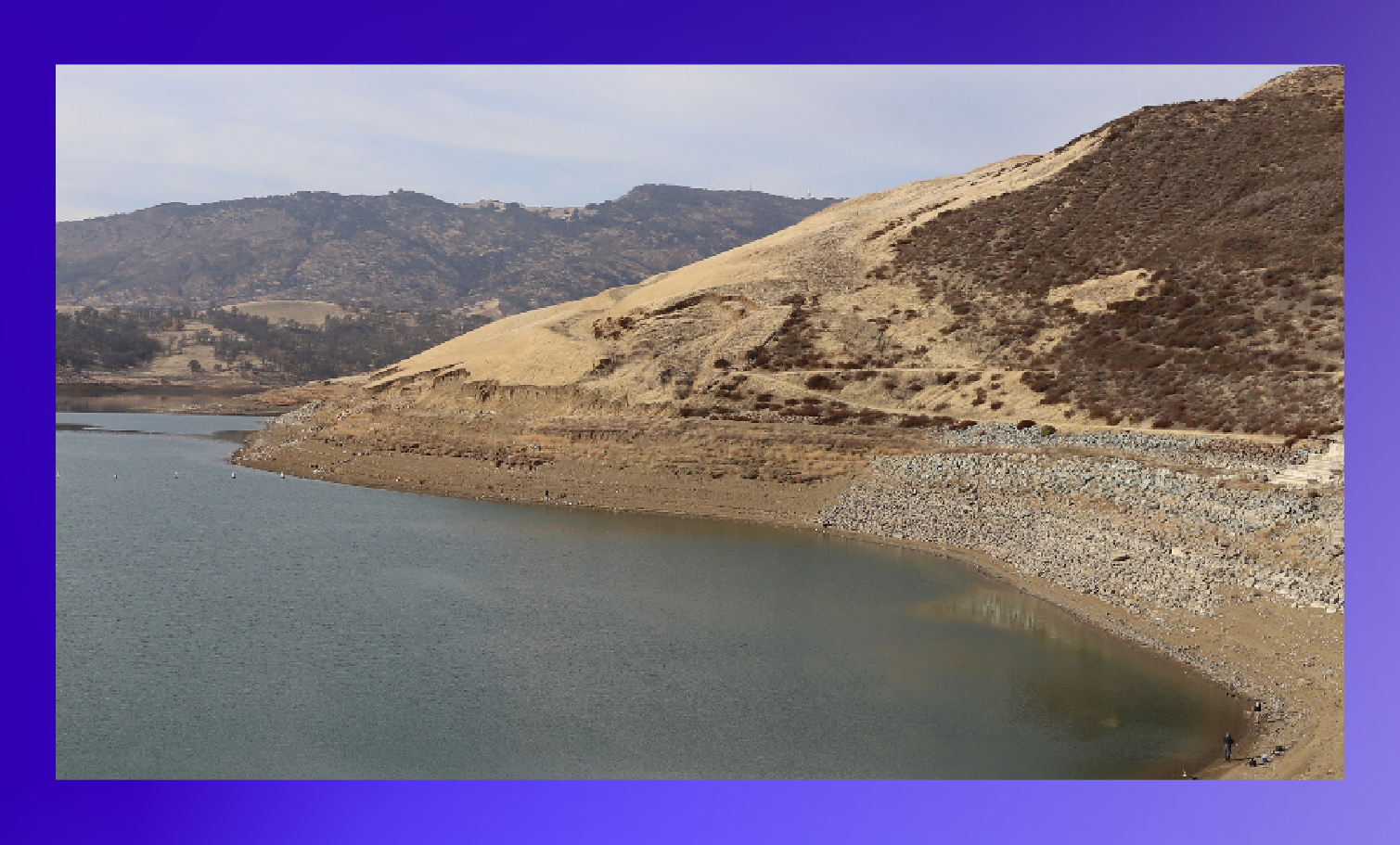
Permitting Without the Panic – How Two Agencies Modernized Their Workflows
With growing regulatory demands, aging infrastructure, and staff turnover, permitting has become one of the most complex (and risky) responsibilities in water management. For Lisa Haney (Orange County Water District) and Greg Buncab (Contra Costa Water District), the solution wasn’t more spreadsheets, it was clarity, structure, and a single source of truth.
“Before Klir, I was surrounded by Post-it notes, Word docs, Excel tabs—and I was the only one who knew where anything was.”
– Greg Buncab, Environmental Compliance Officer, CCWD
From Manual Chaos to Structured Collaboration
Like many utilities, both OCWD and CCWD were dealing with permitting programs spread across systems - and people’s memories. Lisa had 600+ easement permits tracked in one massive Excel sheet. Greg inherited an entire compliance program with no documentation from his predecessor. Information lived in inboxes, desktops, and (more often than not) sticky notes.
Klir offered a new path:
- A centralized hub for permits, programs, and tasks
- Cross-department collaboration with clear visibility
- Automatic reminders, audit trails, and historic context
- A foundation for future AI adoption
“I probably had 20 people a day asking me where something was. That was my whole day. Now they just find it themselves."
– Lisa Haney, Executive Director of Planning & Natural Resources, OCWD
Beyond Permitting – A Place for Organizational Memory
Both agencies quickly saw that what started with permitting could extend further. Greg expanded Klir to track pressure vessels, land use agreements, and safety checklists. Lisa’s team added hydrology, easements, and even institutional knowledge - so future staff wouldn’t have to rebuild from scratch after retirements.
“We’re using Klir to train new employees. What used to take a year now takes a few weeks."
– Lisa Haney, Executive Director of Planning & Natural Resources, OCWD
Results: Transparency, Teamwork, and Peace of Mind
With Klir in place, deadlines are met, documents are easy to find, and cross-team coordination is far simpler. Lisa can reallocate tasks for better workload balance. Greg can sleep without wondering what he forgot.
“Now when someone asks why we do something, I don’t have to explain - I can show them the regulator’s email."
– Greg Buncab, Environmental Compliance Officer, CCWD
Looking Ahead
Both agencies are now exploring how Klir can support digital transformation, from AI-driven insights to reporting automation.
“We want centralized data so we can move into AI. You can’t build intelligence without structure - and Klir gives us that foundation."
– Lisa Haney, Executive Director of Planning & Natural Resources, OCWD
Final Takeaway
If you’re still managing permits in spreadsheets or worried about losing institutional knowledge, now’s the time to rethink your approach.
“Anything with a due date, a risk, or a program behind it - put it in Klir. It’s been a game-changer."
– Greg Buncab
Want to hear the full conversation? Watch the recording to see how OCWD and CCWD are building smarter, more resilient operations with Klir.

Less Stress, More Certainty: How North Charleston Modernized Pretreatment with Klir
Industrial pretreatment programs are under pressure. More industries, tighter regulations, and fewer staff hours mean the risk of missed samples, violations, or incomplete records is higher than ever. For Joshua Earley, Industrial Pretreatment Specialist at North Charleston Sewer District, the old way of managing pretreatment just wasn’t cutting it.
“The former software was basically just a place to plug in numbers. It didn’t really tell us anything — no trends, no red flags, nothing to help us act before problems escalated.”
– Joshua Earley, NCSD
From Reactive to Proactive
Before Klir, Joshua’s team spent hours re-checking data to ensure nothing slipped through. Today, Klir flags violations, highlights repeated results, and even alerts him in real time when something’s off.
“What used to take me three hours — entering 44 sets of data — now takes 45 minutes in Klir. It’s a huge time saver and far less stress.”
– Joshua Earley
As part of implementation, Klir migrated 50–60 customer profiles and historical data, so Joshua’s team started with a clean, complete foundation. With monitoring, inspections, permits, and communications centralized in one secure platform, he can spend less time wrestling with spreadsheets and more time in the field working with industries to improve treatment processes.
ROI That Speaks Volumes
With Klir, the benefits go far beyond time savings. An ROI study with North Charleston showed a 13X return: for every $1 invested, the utility gained $13 back through faster processes, avoided violations, and reduced risk.
Early ROI analysis also found that the district recaptured 10% of staff time previously lost to manual mayhem — time that can now be reinvested in higher-value work.
“Saving time gives me more time to go out in the field, interact with industries, and help them improve their treatment. It helps the whole system get to where we need to be.”
– Joshua Earley
Audit-Ready, Without the Stress
Audits used to be a source of anxiety, with staff spending weeks double-checking spreadsheets and piecing together records. With Klir, everything is already in order — violations flagged, tasks tracked, communications logged. When inspectors arrive, Joshua’s team can show their program is under control in just a few clicks.
“If we miss a violation, the blame falls on us. Klir makes sure nothing slips through the cracks.”
– Joshua Earley
A Faster Path to Operational Data
For North Charleston, onboarding took about four to five months, but Joshua emphasized how closely Klir worked with him to migrate data and get the system running smoothly. Since then, Klir has streamlined the process even further, meaning today’s utilities can be up and running much faster.
Why It Matters for Pretreatment Programs Everywhere
For North Charleston, Klir turned pretreatment from a source of stress into a program that runs smoothly, saves time, and stays audit-ready. The same transformation is possible for any utility: fewer spreadsheets, fewer risks, and more confidence in front of regulators.
Joshua’s story is proof: less time in spreadsheets means more certainty, more visibility, and more impact.
Ready to see what digital pretreatment looks like?
👉 Watch the webinar on demand or book a demo to explore how Klir can modernize your program.
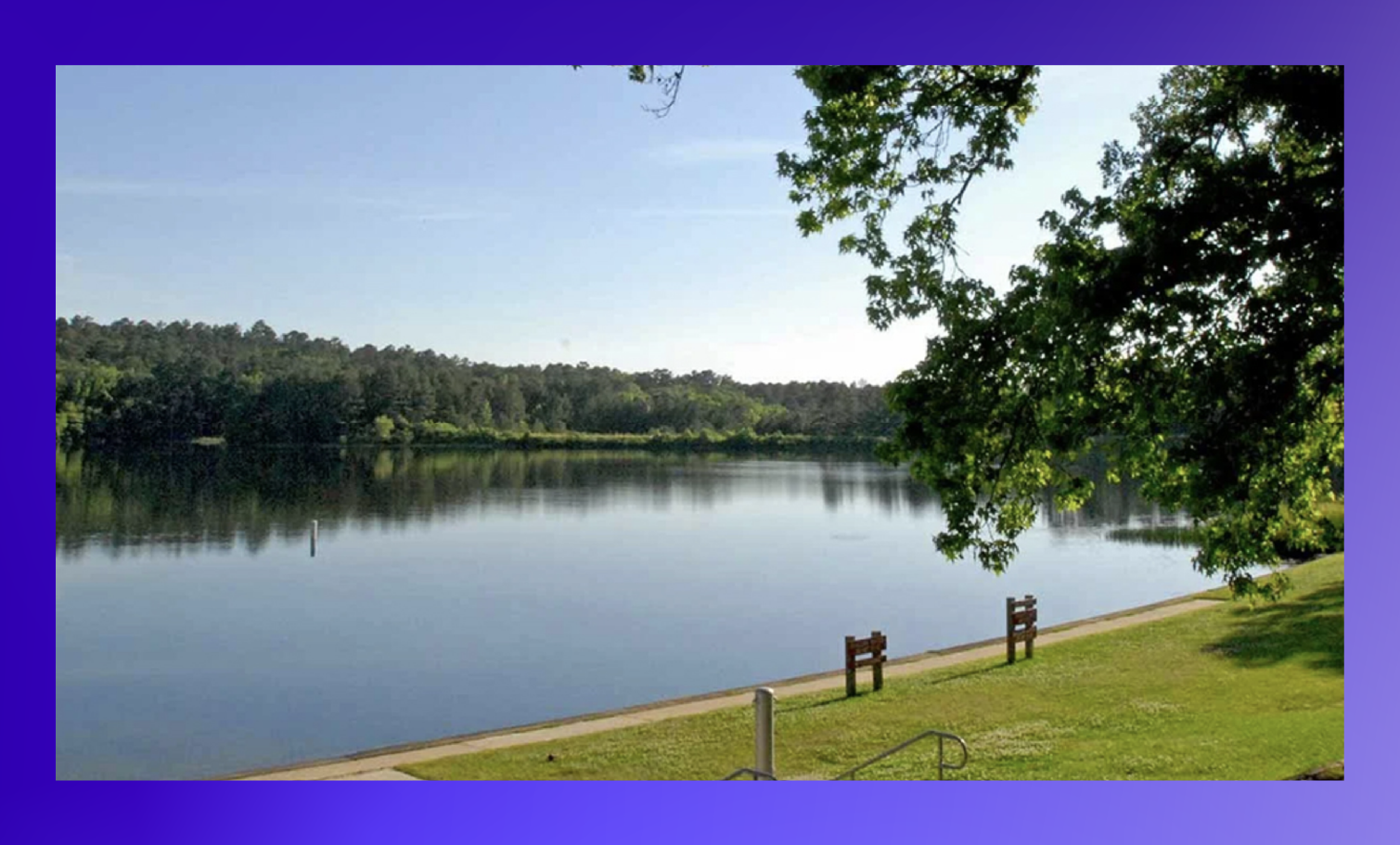
Leaving Linko Behind: How the City of Tyler Streamlined Pretreatment with Klir
The Cost of Sticking with Legacy Systems
The City of Tyler operates a small pretreatment program with a lean team responsible for protecting local water quality and ensuring compliance with industrial users. Like many utilities, the team had been using Linko, a long-standing software for inspection scheduling, sampling, and reporting.
But over time, Linko became more of a hindrance than a help. Data access was limited. Workflows were unintuitive. Connectivity issues slowed down routine tasks. And most importantly, the system couldn’t support upcoming electronic submission requirements from the Texas Commission on Environmental Quality (TCEQ).
“We needed to prepare to submit electronically for the TCEQ, and Linko would not have done anything for that.”
— Sarah Elkins, Pretreatment Coordinator, City of Tyler
The team needed more than a software patch - they needed a system that could grow with them.
Preparing for the Future: Why Klir
The City of Tyler selected Klir to replace Linko. Klir’s operational data management hub would modernize its pretreatment program and give staff the ability to manage the entire program in one place. The decision was guided by a few key priorities:
- Centralize Pretreatment Data: Eliminate scattered spreadsheets and limited-access folders
- Improve Visibility Across the Team: Make it easy for staff to log in, find information, and act on it
- Streamline Workflows: Simplify inspections, sampling, task management, and reporting
- Enable Electronic Submissions: Prepare for TCEQ’s requirements without needing additional systems.
From Migration to Adoption
Transitioning off Linko was a critical moment for the team at City of Tyler, but it didn’t have to be a painful one.
The process began with a clean export of data from Linko. From there, Klir’s onboarding and implimentation team worked with Sarah and her team to map, validate, and upload the data into Klir. Unlike other transitions, this one didn’t require costly consultants or downtime.
Once in Klir, the program was restructured to fit how Tyler actually works - aligning workflows to TCEQ requirements and internal processes. As Elkins noted, the difference was clear immediately:
“Now we’re able to just log on and see what we need, versus not having access for the broader team and limited data visibility with the previous tool.”
Making Pretreatment Easier and More Effective
In the months following the transition, the City of Tyler began to see measurable results, not just in terms of time saved, but in overall program effectiveness.
Operational Efficiency
- 20% time savings compared to previous workflows in Linko
- Staff now spend less time navigating systems and more time taking action
Transparency & Accountability
- All team members have access to real-time pretreatment data
- Managers can easily check task progress and ensure follow-through
Performance & Compliance
- 100% of inspections completed on time
- 100% of monitoring requirements met with results imported monthly
- SNC reports generated directly from Klir, without needing external support
Peace of Mind
- Reduced risk of missed deadlines or lost data
- Confidence that the system supports both routine work and regulatory shifts
Build a Modern Pretreatment Program
For small teams managing high-stakes programs, the right operational data hub can make all the difference. Klir helped the City of Tyler move away from legacy frustrations and toward a modern, unified way of working, improving day-to-day operations and preparing for long-term change.
Whether you’re trying to simplify reporting, prepare for digital submissions, or just gain better visibility into your data, the City of Tyler’s story shows that transitioning off Linko is not only possible - it’s worth it.
At Klir, we’re always improving! Since onboarding the City of Tyler, Klir has implemented a new way of getting data into Klir from Linko, that takes less than one day.

How To Spend Less Time Administering Backflow and More Time Preventing It
Backflow can bring contaminants in homes and businesses back into the main drinking water line, threatening public safety, undermining trust in the water supply, and creating legal and financial headaches for water suppliers.
We all have a role to play in preventing backflow, but in most cases responsibility ultimately falls with local water providers and inspectors. The problem is that many backflow prevention programs are under-resourced and compete with other priorities like distribution, water quality and even FOG, overburdening operators and forcing them to juggle many hats.
The tools utilities use to manage their cross-connection control records don’t help either.
Outdated software, spreadsheets and even paper forms and files create headaches for workers in the field, while administrators at the utility spend hours hunting down test reports, correspondence with customers, and important information about backflow devices.
All of that extra recordkeeping and data entry work is adding up, preventing operators from focusing on tasks that actually add value like inspections, surveys and infrastructure management.
Here are three ways to cut down on the amount of time operators spend administering backflow prevention and more time on actually preventing it.
1. Streamline Reporting and Data Entry
Cross-connection control generates a lot of data, and making sure that data is captured and organized the right way can be a challenge.
Take something as basic as the forms inspectors fill out when they carry out routine backflow assembly tests. Properly filling one out can take a significant amount of time because:
- Test forms can vary by jurisdiction
- Different submission requirements might require paper mail, fax or email submittal
- Forms will often try to fit many different test types–RPZ, DC, DCDA, RPDA, and PVB—onto a single page
Doing everything you can to minimize data entry time and remove as many sources of friction from this process as possible keeps inspectors happy and productive while cutting down on delays and unnecessary work.
One essential piece in your toolkit: a web-based, configurable reporting tool like Klir that simplifies inspection management and provides a user-friendly interface for risk assessment, survey, test and incident report data entry.
Replacing a spreadsheet or paper-based process with a web-based one can save inspectors hours of data entry time per week and free them up for more important tasks.

2. Increase Data Accessibility
Getting data into your system is important. But getting that data back out and into the hands of the people who need it most is crucial, especially if your water system experiences a backflow event.
In addition to potentially endangering public safety, causing denial of service to customers and loss of revenue for the utility, backflow incidents can put a huge administrative burden on water providers.
One study by the American Backflow Prevention Association (ABPA) found that operators spent an average of 494 hours investigating each backflow event, incurring an average personnel cost of $14,800 per incident. Another study from USC put that figure at $16,143 and found that one utility had spent more than $1.6 million responding to a single event.
Keeping risk assessment, survey report and inspection data in one easy to use system can make a world of difference during a backflow investigation, helping:
- Cut down on time lost hunting down information
- Improve response times and ultimately cut down on risks to public safety
- Simplify backflow incident reporting
It bears remembering that most large water providers are legally obligated to keep these records. Not keeping them in a dedicated data management or recordkeeping system could create issues around liability and even result in fines, especially if a backflow incident ever occurs.
3. Bring Everything Together Into One Dashboard
We’ve talked about the personnel hours and costs involved in a backflow investigation. But what about the day-to-day work of scheduling inspection routes, corresponding with customers and reporting to regulators?
Those priorities can be difficult to stay on top of when you’re tied up with record keeping and paperwork. But they’re also precisely what we create more time for when we do a better job of managing backflow data.
Powerful dashboards like Klir can do exactly that, giving administrators easy access to their entire backflow prevention program at a glance and bringing it all together into one detailed report, making it easier to:
- Plan and manage inspections
- Track important program metrics like new installations and enforcement actions
- Stay on top of compliance, violations and correspondence with customers

Take Control of Your Cross-Connection Program With Klir
Klir’s backflow module helps utilities schedule, organize, and run effective cross-connection control programs. Most importantly, it gives organizations the means to keep comprehensive digital records on all their cross-connection activities. To learn more, book a demo today.
The EPA Is Rolling out Its PFAS Plan. What Does It Mean for Utilities?
Per- and Polyfluoroalkyl Substances (PFAS — pronounced “PEE-Fass”) are a class of synthetic “forever chemicals” that have been linked to cancer, high cholesterol, and even the suppression of vaccine effectiveness in children. They’re present in everything from nonstick pans to fire extinguishers and they accumulate easily in the environment, making them an increasingly big problem for water systems.Some European countries and Maine have banned the chemicals, 29 states have already introduced numerical PFAS limits for water, and more than 100 anti-PFAS bills were passed across the country last year.Although many American water utilities are still figuring out how best to deal with them, there are signs regulators are getting serious about introducing federal rules for PFAS. After years of being accused of inaction, the White House is publicly detailing its anti-PFAS plan.The United States Environmental Protection Agency (EPA) has also used some tough language of late.Administrator Michael Regan recently pledged to “turn the tide” against the chemicals by “harnessing the collective resources and authority across federal, Tribal, state, and local governments to empower meaningful action now.”Recently the EPA announced that 29 of the next 30 pollutants it would look at under its Unregulated Contaminant Monitoring Rule (UCMR) would be PFAS, signaling that the agency was taking concrete steps to regulate the pollutants.
What is the UCMR and how does it work?
The EPA releases a new Unregulated Contaminant Monitoring Rule (UCMR) every five years.The UCMR requires public water systems that serve more than 10,000 people to start sampling for a list of contaminants that they previously could ignore. (The latest list — UCMR 5 — will require systems serving more than 3,300 people to sample, as well as a representative group of 800 smaller systems.)The EPA evaluates candidates for new UCMR lists based on studies that show how harmful they are, how actively they’re being used, and how readily available data is on their frequency of use.The agency says UCMR data is one of the key sources it uses to make regulatory and other risk management decisions.“[UCMR 5] data will ensure science-based decision-making and help prioritize protection of disadvantaged communities,” the EPA says.
What is the EPA’s PFAS strategy?
The agency’s roadmap for dealing with PFAS is centered on a “new three Rs” of sorts: Research, Restrict, and Remediate.The EPA wants to learn more about PFAS, prevent the chemicals from entering the natural environment as much as possible, and hasten the cleanup of PFAS across the country.In a roadmap document that will take the agency to 2024, the EPA lays out a number of other strategies to deal with PFAS that could affect drinking and wastewater utilities.
Spring 2022: Enhance PFAS reporting under the Toxics Release Inventory (TRI)
Some utilities have to report PFAS to the TRI. The EPA says it plans to get rid of 11 exemptions and exclusions for those reporters by labeling PFAS “Chemicals of Special Concern.” This will help the EPA collect more data on the chemicals.
Winter 2022: Finalize new PFAS reporting under TSCA Section 8
By Jan. 1, 2023, there will be a new rule in place regarding data collection about PFAS produced since 2011, including information on uses, production volumes, disposal, exposures and hazards.This will also help the EPA get to know the sources and quantities of PFAS in the U.S. and will be used to develop future regulations.
Fall 2023: Establish a national primary drinking water regulation for two PFAS
The EPA has not yet established national drinking water guidelines for PFAS. It will put forward a proposal to do so this fall, followed by a final rule expected in fall 2023.The agency has proposed regulating two PFAS in drinking water: perfluorooctanoic acid (PFOA) and perfluorooctane sulfonic acid (PFOS).It says more PFAS will be considered this year and in the future.
Winter 2024: Restrict PFAS discharges from industrial sources
The EPA plans to put forward new Effluent Limitations Guidelines (ELGs) to limit how much PFAS industrial utilities, like municipal sewage treatment facilities, can emit.The agency has done a multi-industry study on PFAS discharges, and “plans to make significant progress in its ELG regulatory work by the end of 2024.”Actions to come include:
- Restricting PFAS output in organic chemicals, plastics and synthetic fibers, metal finishing, and electroplating.
- Studying facilities where there’s a bit of data, but not enough to make a new rule — such as electrical and electronic components, textile mills and landfills.
- Studying facilities with not much data — such as leather tanning and finishing, plastics molding and forming, and paint formulating.
- Monitoring industrial categories slated to phase out PFAS by 2024 — such as pulp, paper, paperboard and airports.
Winter 2022 and Fall 2024: Leverage NPDES permitting to reduce PFAS discharges to waterways
The EPA will include new restrictions in its National Pollutant Discharge Elimination System (NPDES) to reduce PFAS discharges at the source. The rules are expected this winter.Utilities and industry will have to
- Eliminate or substitute other chemicals for PFAS
- Use non-PFAS firefighting foams
- Enhance public engagement with downstream communities and public water systems
- Use pretreatment programs to control PFAS at the source
Winter 2022 and Fall 2024: Publish final recommended ambient water quality criteria for PFAS
The EPA sets out recommended water quality criteria for states and tribal governments to use. Soon, those recommendations will include PFAS limits.It will start with PFOA and PFOS, and move to other PFAS later.Criteria for aquatic life are expected in winter 2022, and human health criteria are expected in fall 2024.
Winter 2024: Finalize risk assessment for PFOA and PFOS in biosolids
The EPA may set limits on the amount of PFAS that can be in biosolids (sewage sludge) from wastewater treatment facilities. PFAS can contaminate crops and livestock when used on farms.The agency will complete a risk assessment for PFOA and PFOS by winter 2024, to determine if limits are necessary.
2024: UCMR 6 and Beyond
According to the EPA, UCMR 5 is just the beginning.“Going forward, EPA will continue to prioritize additional PFAS for inclusion in UCMR 6 and beyond, as techniques to measure these additional substances in drinking water are developed and validated,” the agency said in its roadmap to 2024.
What are other utilities doing about PFAS?
Some larger utilities are already ahead of the game.Klir has profiled the Santa Clarita Valley Water District’s (SCV) anti-PFAS efforts. That utility put forward a radically transparent plan — publicly sampling for all PFAS, even though California only required them to sample for 15 at the time.The SCV used techniques like reverse osmosis and ion exchange to remove PFAS from water — and did it all quickly, and with flexibility in mind.For forward-thinking utilities like the SCV, the EPA’s UCMR 5 announcement could mean more funding from government agencies for its existing programs.Those who fail to move quickly will have to deal with more sampling work, and may miss out on important sources of funding.
Is there funding available to help fight PFAS?
The federal government has set aside billions for PFAS mitigation.
- The Safe Drinking Water Act provides $5 billion for small communities to buy filtration equipment
- The Drinking Water State Revolving Fund provides $4 billion for water utilities to deal with emerging contaminants “with a focus on PFAS"
- The Clean Water State Revolving Fund will give $1 billion for technical assistance for rural, small and tribal wastewater treatment facilities to fight PFAS.
The EPA has awardedmillions in grants for PFAS research and mitigation. The agency said data gathered from UCMR 5 “will also serve as a potential source of information for systems with infrastructure funding needs for emerging contaminant remediation.”Other levels of government have instituted similar programs. Be sure to check with your local government and environmental authority about funding that could be available to you.
Prepare for PFAS With Klir
Klir is a single, unified operating system for water, pulling every aspect of water management—including compliance, sampling, reporting and more—into an easy to use dashboard.Looking to bolster your sampling operation to prepare for PFAS? Speak to a Klir expert about how our platform can reduce administration and paperwork while optimizing your organization for new regulations.

Drinking Water Contaminants: How Water Utilities Are Keeping Us Safe
Last year the EPA released the biggest overhaul to its Lead and Copper rule since 1991, and in November Congress included $15 billion for lead pipe replacement in its infrastructure plan, signalling that U.S. regulators were finally getting serious about lead in drinking water.
They’ve got their work cut out for them: 10 million service lines in the U.S. continue to be made of lead, which is particularly harmful to children, has a disproportionate impact on low-income communities with aging and outdated infrastructure, and has led to public health crises like the one we saw in Flint, Michigan a few years ago.
That’s why in addition to the new regulations, last week the EPA announced it would open its Lead Strategy up to public input and provide communities affected by lead contamination with the chance to provide verbal input during a series of comment sessions held over Zoom.
But while lead is currently making headlines, it isn’t the only contaminant that drinking water utilities are working hard to keep at bay—and it also isn’t the only contaminant that the general public has a role in helping manage.
Here are six other common drinking water contaminants, how your water provider protects against them, and how you can help.
PFAS
Public awareness of per- and polyfluoroalkyl substances, or PFAS, has been steadily increasing in recent years. But is it something you should be concerned about?
PFAS are used to make takeout packaging, nonstick pans, food containers and numerous other everyday items. These “forever chemicals” have been linked to a growing number of health problems, including cancer, organ failure, and hormonal changes, and they’re also ubiquitous. (One study estimates that they might already be present in 98 out of every 100 people’s bloodstreams.)
Water providers have a variety of techniques to remove PFAS from drinking water, like ion exchange and reverse osmosis. But because utilities have only started to pay attention to PFAS in recent years, these technologies aren’t yet widely adopted.
If that worries you, there are some actions you can take. Ask your water provider for data on PFAS testing from your area. Avoid Teflon and nonstick pots and pans. Opt for household cleaners that don’t contain PTFE in the ingredients. And if you’re still concerned about PFAS in your home, consider installing a reverse osmosis filtration unit in your home. But be prepared to pay. These units can get expensive.
Chlorine
This is a bit of a mixed bag. On one hand, excessive chlorine exposure can cause skin and eye irritation. However, chlorine is a “miracle chemical” when it comes to keeping freshwater supplies safe and drinkable. Your tap water contains small levels of chlorine, and that’s critical for filtering out harmful microorganisms.
If you notice your water has a strong chlorine smell, a charcoal filter (like a Brita) can go a long way to neutralizing the taste.
Mercury
Mercury is naturally occurring, and usually appears in non harmful concentrations. However, excess mercury levels from industrial pollution can be extremely harmful. Long term health problems include tremors, decreased mental function, and—in extreme cases—respiratory failure and death.
Thankfully, water providers are very effective at preventing mercury from reaching unsafe levels. So while the health effects of mercury are alarming, it’s unlikely to put your household at risk.
If mercury does concern you, for example, if you’re on well water rather than a municipal water supply, a reverse osmosis or absorption filtration can easily remove 95-97% of mercury from your water.
Pharmaceuticals
Did you know that flushing your unused medication down the toilet can be harmful to your community’s waterways? Trust us—those disposal instructions on your medications are there for a very good reason.
Hospitals and care facilities dispose of an average of 250 million tons of unused medication a year. Can you imagine the impact on your health if that made it into your tap water?
Water pollution from unused medications is usually from medical or manufacturing facilities not following the rules. But chucking a few of your unused pills in the garbage or toilet also adds to the problem. So, the next time you’re emptying out the medicine cabinet, follow those instructions.
Herbicides
Love a lawn that looks its greenest? Then you’ve probably used herbicides. Used to kill unwanted plants (weeds, mostly), herbicides can quickly spread to freshwater sources. Farms and golf courses are the primary culprits of herbicide introduction into water sources, but the herbicides you use to keep your lawn looking fresh also contribute.
Seem harmless? It isn’t. Potential long-term impacts include organ damage (the liver, in particular), hormonal imbalances in children, and cancer.
The good news is that filtration techniques like activated carbon, clay, and peat can all minimize the risks of herbicides, and your water is treated to remove these toxins before it even reaches your tap. Still, when it comes to personal lawn care and gardening, use best practices to prevent unwanted herbicides from entering your community’s water.
Pesticides
Similar to herbicides, pesticides are used to kill unwanted insects and bacteria in agriculture and lawn care. Pesticides can spread to fresh water sources much like herbicides—generally through rainfall and irrigation runoff. Like herbicides, there are a massive number of pesticides out there—and we don’t yet know the long-term health impacts of all of them. However, municipalities and water networks have effective ways to minimize their impacts.
There are a wide range of toxins and pollutants that can have harmful impacts on human health. But generally, the techniques your municipality uses to keep those risks at bay are very effective.
Still, there are small actions we can all take to reduce exposure to potential pollutants, and to help ease the load on your water community’s water provider.
America has some of the world's safest drinking water thanks to the hard work of local water utilities. Do your part to reduce the introduction of further toxins and pollutants into something so fundamental and critical to all of us—fresh water.
Klir is the all-in-one water regulation and compliance platform built by water experts, for water experts. See how Klir works, and how we can help your utility save time and money—all while keeping your water safer and more secure.

How to Prepare for PFAS (& Avoid a PR Disaster)
“A town's water is contaminated with 'forever chemicals' – how did it get this bad?” That’s one of the headlines that residents of Pittsboro, North Carolina, woke up to earlier this year when the Guardian published a story about the community’s water supply.
Researchers had found that a local Chemours/DuPont chemical plant had released potentially toxic amounts of Per- and polyfluoroalkyl substances—also known as PFAS or “forever chemicals”—into the town’s water supply.
As more of these investigations play out in the public eye, PFAS represents one of the greatest threats to public confidence in drinking water in recent memory.
For municipal leaders and water operators across the country, the question is: what can you do to prepare?
PFAS Goes Public
PFAS entered the national conversation just a few years ago, but research has already linked them to everything from liver cancer to reproductive health issues, and some states have moved to ban them altogether. Congress began to move on PFAS last month when it passed the PFAS Action Act of 2021, which will require the EPA to establish national standards for PFAS levels in drinking water in the future.
Although the EPA already includes PFAS on the list of contaminants it tracks under the unregulated contaminant monitoring rule (UCMR), few laws currently exist dictating what utilities should and shouldn’t be doing about PFAS.
But if you ask WaterPIO founder and communications expert Mike McGill, utilities waiting for directives from legislators are missing a key opportunity to position themselves as leaders on the issue.
“The next time the EPA updates UCMR, you might have to start testing for dozens of different PFAS, and those testing requirements might cover more and smaller utilities. And if that's the case, you’ll have to start communicating about PFAS as soon as you can.”
The Price of Waiting
Much is still unknown about the exact health risks posed by PFAS and the best ways to eliminate them from our water supply. But one thing is for sure: just because PFAS isn’t a problem in your backyard right now doesn’t mean that it won’t eventually be.
“Academics and activists are out there in the interest of protecting public health. They're going to conduct tests in our waterways, and they are going to find these chemicals, and when they do find them, they're going to keep making headlines,” says Mike McGill, who like many other water experts, believes we’re due for a reckoning on PFAS.
He says that if utilities don’t become the first communicators on the subject—that is, the first point of truth that the public turns to for accurate PFAS information in the local water supply—they risk losing control of the narrative completely.
“It becomes a scandal, if you will. Then suddenly we have to start throwing solutions against the wall to make up for the fact that we're behind. And that's where you start making mistakes.”
Utilities that choose to wait until they’re forced to respond risk the following:
Losing Time and Money
Waiting can get expensive. McGill recalls how one water utility in North Carolina spent more than $150 million on a facility to treat water for less than 100,000 people in a rush to address a local PFAS contamination.
PFAS treatment technologies like granular activated carbon (GAC) and ion exchange are already expensive, but if utilities wait until they’re forced to act, they risk scrambling to calm a distraught customer base and hastily picking a treatment solution that might not work for them in the long term.
Losing Control of the Narrative
Just because utilities didn’t create the PFAS problem doesn’t mean they should be afraid of taking responsibility and claiming the issue as their own.
Not doing so could mean that someone else—regulators, environmentalists, manufacturers, or even customers themselves—takes control of the narrative. And as McGill emphasizes, when utility customers discover that they have potential carcinogens in their drinking water, “it wasn’t me!” probably won’t cut it as an excuse.
“If you're not leading the conversation, then the customer is [simply] going to blame the utility for something they didn't do.”
Eroding Trust
Utilities will have to ‘go first’ when it comes to communicating the threats and challenges of PFAS, and for many organizations—especially smaller utilities not used to doing lots of communications work—doing so might seem like a nerve-wracking experience.
But McGill says waiting could fundamentally erode a utility’s relationship with its customers.
“I used to run a newsroom for a couple of years, and we had an old adage: ‘if I hear from you first, I trust you first. If I hear from you last, I trust you last.’”
Testing, Treatment, and Transparency
If you’re looking to get ahead of PFAS, Santa Clarita Valley (SCV) Water Agency sets a shining example for a successful communications strategy.
In 2019, California state officials started asking utilities to test wells for PFAS contaminants. The order didn’t require agencies to take any further action, even if they discovered high levels of these contaminants.
Still, when SCV discovered that one of their wells had exceeded the 70 nanograms per liter advisory level, they sprung into action. They shut down the contaminated well, and began sampling all of their other wells for PFAS.
The agency quickly put in motion plans to build a new treatment facility, but its plan would rely on an even more immediate line of defence.
SCV embarked on an ambitious communications campaign to bring their fight with PFAS out into the open, led by communications manager Kathie Martin.
The agency began posting regular updates about PFAS testing, changes in regulations, and progress on their (now complete) treatment facility construction to a dedicated portal on their website, social media, and the agency’s email newsletter. Customers also had ample opportunity to learn about PFAS offline, at community meetings and via direct mail.
“Not only were we trying to be completely transparent upfront. We also wanted to be a little bit ahead of the game. That turned out to be the right decision,” says SCV operations director Mike Alvord.
The Benefits of Communicating Proactively on PFAS
So, should your agency take a leap of faith, or adopt a “wait and see” approach?
Experts like Mike McGill argue that effectively communicating on the issue could result in lasting, long term benefits:
Develop a Leadership Advantage
‘Going first’ on PFAS won’t just allow utilities to cut down on public relations risk. It could also permanently cement their place as leaders and experts on the issue, building lasting credibility with customers, media and other stakeholders who are looking for answers.
“If you are willing to get out front and say, ‘we're going to test, and we want to go above and beyond, because that's what we think our role is as the provider of safe clean drinking water is,’ there's a lot of power behind that. Especially when you get results,” points out McGill.
Influence Policy
One specific advantage to adopting a leadership position on an under-regulated contaminant like PFAS is that utilities stand to meaningfully shape policy as it’s being written.
The more effective utilities are at communicating the on-the-ground realities of treating water for PFAS, the more likely it is that those realities will inform future legislation.
Build More Proactive Organizations in General
The benefits of effectively communicating on issues like PFAS also go beyond any single contaminant or treatment project.
As SCV’s Alvord points out, his organization’s radically transparent approach to the issue did more than just alleviate Santa Clarita Valley residents’ fears about PFAS. It also helped his organization come together and build a strong work culture in the wake of an 2018 SCV agency merger that combined four separate water utilities into one.
“We brought in different cultures, different personalities, and we immediately had to work together because we had to try to form our own new culture,” says Alvord, noting how SCV’s efforts to remain transparent to the public also ended up making the organization more transparent to itself, and therefore more cohesive.
“If we were separate, I think it would have been much more difficult.”
Proven practices for PFAS PR
Taking a lessons from agencies like SCV, here are some approaches to consider as you look to communicate how your agency is acting on the PFAS problem:
1. Take Credit for Your Work
The first step of any good PFAS communication strategy is to take stock of what your organization is already doing about the issue, and to not be afraid to brag about it.
Have you already started testing for certain PFAS? Has your utility already started working with PFAS treatment technologies like reverse osmosis, GAC, and ion exchange? Then your customers need to hear about it.
Make sure that any valuable work you’re already doing on PFAS doesn’t get buried or confined to just one communication channel, either.
“I worked with one utility that tested for 75 different PFAS, and their data was spectacular. But they only made a passing reference about that in their water quality report,” points out Mike McGill.
These types of documents tend to get buried on your website. If you’re not actively pushing this information out to the public, it will likely fall by the wayside.
2. Identify Other PFAS Advocates and Experts
It might also be useful to take stock of other experts in your network or area who might be doing important PFAS work.
Are there any local academics who have published research on PFAS in the past? Environmentalists who have lobbied local governments? Media outlets who have published stories about PFAS? Now might be a good time to become familiar with them and their work, and use it to inform your strategy.
3. Take a Leadership Role
Even if your utility already does excellent work on PFAS and has good relationships with external stakeholders, you might still feel apprehensive about broadcasting those efforts to your customers.
McGill understands why utilities might be nervous to take the lead, but he says that the ones that do stand to benefit far more in the long run than those who stay quiet.
“You need to become a thought leader, because by doing so you help out the entire industry. You show the path of how to handle it properly.”

Getting More out of Biosolids With Better Data
"We used to have a plant manager who would say he'd put it on a Triscuit and eat it. I don't know that I'd do that, but it certainly wouldn't harm you."
That’s what Ryan Cerrato, an employee at New York-based composting company WeCare Organics, told a Vice journalist about his company’s compost in a recent documentary.
WeCare makes compost from biosolids—human waste that has passed through sewage treatment—which it then sells to farmers, nurseries, and gardeners as high-quality fertilizer. While most American consumers might not know it, biosolids are becoming an increasingly important part of our water treatment and agricultural systems.
As wastewater utilities face growing pressures to find cost savings while also increasing environmental outcomes, improving the quality of biosolids is becoming more important than ever before.
So how exactly can treatment plant managers get more out of biosolids while spending less? It’s a question that might very well come down to data.
What are biosolids?
Biosolids are solid waste that have been treated and reclaimed from the water system.
About half of all biosolids produced in the U.S. today are recycled and used as fertilizer. But not all biosolids are recycled: of the roughly 4.75 million dry metric tons (dmt) the country produced in 2019, a little under half ended up incinerated, landfilled, or stored as waste. With the right treatment processes, all of that waste could be put to more beneficial uses.
That’s where the question of biosolids quality comes in.
What are Class A and Class B biosolids?
The EPA’s 40 CFR Part 503 is the guiding star for wastewater operators and other processors looking to gauge the quality of their biosolids. This framework breaks biosolids down into two classes:
Class A biosolids have been treated and tested for pathogens and deemed safe enough to use in agriculture, gardening, and landscaping. They’re the kind that companies like WeCare buy from utilities, process, and resell: good for the environment and crucial to creating a closed loop, zero-waste system.
Class B biosolids are any that don’t make Class A. They might be safe enough to use in some applications, but they also contain detectable pathogens and/or high concentrations of metals like arsenic, chromium, and mercury that might make them unsuitable for growing food or soil remediation.
While Class A biosolids are an asset, Class B are expensive to dispose of and transport, and might pose a health risk for people working with them. So getting that B grade up to an A is worth more than just extra credit.
How to test biosolids
Most wastewater treatment plant operators have their eye on three different kinds of data when they make decisions about what to do with biosolids:
- Sampling results, which are conducted at various stages of the treatment process and analyze water and biosolids for pathogens, drugs, metals, and other contaminants.
- Continuous monitoring data from certain pieces of plant equipment for variables like temperature and pressure.
- End product data, like class (A/B), weight, water content, transportation and disposal cost, etc.
For decades, plant operators have relied on legacy infrastructure to monitor this data and make decisions in the biosolids treatment process. But modern cloud-based platforms are giving operators the ability to view and analyze this information, so they can spot trends and act sooner.
Systems like Klir merge real-time data from sources likesupervisory control and data acquisition (SCADA) and laboratory information management systems (LIMS) to reveal opportunities to improve the product quality while managing harmful contaminants from the outset.
The risks of lagging data in biosolids processing
Working in spreadsheets and SCADA systems can feel a bit like pulling teeth. They’re slow, opaque, unintuitive, and often few people at an organization have the ability to pull reports.
These delays mean that operators are often reviewing the data long after it was processed—sometimes a month later, and have little means of intervening in the biosolids treatment process until it’s too late.
These lagging data sources aren’t just an annoying time suck: they can also pose a genuine threat to your operation.
Those risks include:
1. Releasing contaminated biosolids
When there’s a lag between the time a sampling test is completed, and the time that an operator can manually query and interpret those results, there’s a lot that can be missed or go wrong, including the possibility that those solids leave the plant before the test results come back.
Those kinds of mistakes can be costly—nine agencies received hundreds of thousands of dollars in fines from the EPA in 2019 for approving contaminated biosolids.
2. Reporting and record-keeping errors
Using Excel to deal with ever-larger data sets opens you up to the possibility of data loss, which can cause major reporting problems.
Filing a false report, even by accident, carries a fine of up to $10,000 and up to 2 years in prison. Meanwhile, willful violations carry a criminal fine of $5,000 to $50,000 per day of violation and up to 3 years in prison.
3. Data access problems
Your organization’s data should belong to the organization. But if team members are constantly creating their own workarounds to address the limitations of legacy software and spreadsheets, that can create problems around data ownership, especially if one of those team members is absent or leaves the organization.
How real-time data analysis drives better biosolids
For treatment plant operators, intuitive platforms like Klir are making it easier to access and display vital data and make decisions quickly.
The result? Treatment plants save on transportation costs, while minimizing biosolid waste.
Here are the key ways that water & wastewater analytics software help drive better outcomes:
1. Reduce costs and improve product quality
Biosolids are heavy, and the more water a treatment plant can extract from them, (known as “cake dryness”) the lower their transportation costs. With real-time data analytics, plant operators can take the right actions to lower transportation costs and identify efficiencies that might otherwise be invisible.
Real time data lets you:
- Proactively influence the product outcome with an end-to-end view of operations
- Develop key insights into product grading
- Perform ongoing weight vs. cost analysis
- Set budgets to meet cost and quality goals
2. Better report design and data collection
Displaying data in a format that is easy to understand and ‘ready to go’ decreases the amount of time workers must spend processing and understanding their data while also encouraging and rewarding better data collection.
3. Stay in compliance and predict problems before they happen
Data analytics dashboards help operators and managers identify any failures or problems that might come up, cutting down on costly compliance errors.
Quicker and more up-to-date sampling results also mean that plant operators can focus on forecasting trends and anticipating problems rather than constantly working backwards to trace where a contaminant came from. The result? Treatment plant teams can:
- Stay compliant with real-time quality monitoring
- Receive automatic warnings when contaminants approach or exceed limits
- Proactively triage issues and intervene before contaminated product leaves the facility
4. Increase efficiency
Automated data analysis frees plant managers from data detective work, and gives them new insights on how to continuously improve their processes, allowing them to:
- Analyze sampling data in real time, no queries required
- Spot problems before they happen
- Ensure monthly and annual reports are always consistent
- Perform reporting work in a fraction of the time
5. Break down data silos
Providing plant operators and employees with clear visuals and a holistic data view can help dismantle a culture of reactivity by de-siloing information. The result is a holistic picture of operations across the plant.
With transparent and interactive dashboards, managers and employees can:
- ‘Slice and dice' data to meet their business needs
- Confidently depend on a single source of truth
- Create an open forum for communication
6. Futureproofing
Wastewater organizations that move to cloud-based systems to manage data across their plants are in a better position to anticipate future changes to biosolids regulations and industry standards. That’s because they can easily add new reporting criteria and scheduling requirements, merge in new data sources, or add in new parameters to instantly spot troubling maximum contaminant levels (MCLs).
Improve your biosolids with Klir
Klir’s treatment plants module is designed to help wastewater treatment operators access real-time insights, so they can reduce the cost of managing biosolids and effluents while improving their environmental performance.
Interested in learning how Klir can help your facility improve its performance? Talk to one of our experts.

Acting Fast on PFAS: Now is the Time
How One California Water Utility is Leading the Fight Against the ‘Forever Chemicals’
If you work in water and wastewater, you might remember Erin Brockovich’s successful 1993 lawsuit against Pacific Gas & Electric (PG&E), which proved the company had contaminated a small California town's water supply with a toxic compound called chromium 6.
The $333 million settlement Brockovich negotiated is still the largest in U.S. history, and the wave of awareness her case brought to environmental toxins–helped along by the eponymous 2000 Oscar-winning Julia Roberts film–is considered by many environmentalists today to be a turning point in environmental policy.
So, when the Santa Clarita Valley (SCV) Water Agency’s Mike Alvord first heard about per- and polyfluoroalkyl substances or “PFAS” in 2019, he was certain the general public was due for a similar wake up call.
Ohio residents had launched a similar class action lawsuit alleging a DuPont chemical plant had contaminated the drinking water of 70,000 people with PFAS in the early 2000s. A film about the lawsuit titled Dark Waters starring Mark Ruffalo and Anne Hathaway premiered in 2019, just a few months after the state of California ordered water utilities like SCV to start sampling wells for PFAS. At one point Erin Brockovich herself even re-emerged into the public eye to sound the alarm on PFAS.
“I really thought that was going to be the next Erin Brockovich,” says Alvord.
But the premiere of Dark Waters came and went, and the anticipated wave of public outcry against PFAS never materialized.
“It didn't turn into much. Maybe [with COVID] there were too many distractions.”
Despite the relatively tepid public response, Alvord and his colleagues at SCV knew that PFAS was real and that it wasn’t going away any time soon. So instead of waiting for regulators and the public to catch up, they decided to get ahead of the problem.
What is PFAS?
PFAS (pronounced ‘Pee-Fass’) are a class of synthetic “forever chemicals” found in everything from nonstick pans to takeout containers to the foams used in firefighting.
“It's ubiquitous. The United States has been manufacturing PFAS chemicals since the fifties, and consumers have been enjoying the benefits of PFAS chemicals for decades,” says Alvord.
Studies have shown that PFAS may be associated with reproductive health issues, testicular and kidney cancer, high cholesterol and suppression of vaccine effectiveness in children, and that it might already be present in 98 out of every 100 people’s bloodstreams.
Some European countries and Maine have banned the compounds, but American water utilities are still grappling with how to best manage these contaminants. Most of them weren’t aware of PFAS until 2015 when the EPA added it to the list of contaminants it tracks under the unregulated contaminant monitoring rule (UCMR), and to this day there are few concrete rules around PFAS.
Alvord is the Director of Operations and Maintenance at SCV, which provides water to more than 300,000 business and residential customers in Southern California. When he and his colleagues discovered that one of the agency’s wells had exceeded the EPA’s advisory level of 70 nanograms per liter for two PFAS chemicals in 2019, no law or rule required them to shut down the well.
“But we immediately shut it off. We didn't have to, but we did–for the sake of the public and the sake of the uncertainty. We just didn't know what was going on.”
The First Line of Defence: Transparency
Instead of dealing with it quietly, the SCV decided to bring their fight with PFAS out into the open.
The 2019 California order had only required SCV to sample 15 of their wells for PFAS, but the agency began sampling all of them. They also began posting regular updates about their findings to their website, and took a radically transparent approach to informing their customers about the PFAS threat in Southern California.

Alvord says that transparency didn’t just help SCV act quickly on the PFAS problem. It also helped the agency–which was formed after the state merged four separate water utilities in 2018–find its feet as a new organization, come together as a team, and build a strong work culture on short notice.
“We brought in different cultures, different personalities, and we immediately had to work together because we had to try to form our own new culture,” says Alvord.
“If we were separate, even though we worked well together separately, I think it would have been much more difficult.”
Removing PFAS from Water
Most drinking water & wastewater utilities have three lines of defence against PFAS. They can use:
1. Reverse osmosis, which forces water through a high-pressure membrane.
2. Granular activated carbon, like the kind you find in refrigerator water filtration systems, which is also the most studied PFAS removal solution.
3. Ion exchange, a process by which PFAS compounds are absorbed into a special kind of resin.
The problem is that none of these technologies were originally designed to remove PFAS from the water, and they each have room for improvement.
The energy costs involved in reverse osmosis, for example, usually make it prohibitively expensive for water utilities. Granular activated carbon can also get expensive, not just materials-wise but also because of the amount of byproduct that needs to be disposed of.
Even ion exchange, the solution SCV settled on, can be challenging in the amount of byproduct it produces.
Staying Flexible and Keeping an Open Mind
More interesting than SCV’s technology choice itself, however, is the sheer speed with which the water agency was able to design, permit, and build the facility–during the COVID shutdown no less.
SCV’s new PFAS treatment facility in Valencia is an impressive sight: six massive vessels filled with ion exchange resin churn through up to 6,250 gallons of water per minute, enough to serve an estimated 5,000 households every year.
Most agencies would have taken years to build the facility, but that was time that Alvord says the SCV didn’t have when they embarked on the project in 2019.
“So instead, we did all of it at the same time. We were doing planning, bidding for construction, design–all of that simultaneously.”
It took just one year to construct the facility, which today produces upwards of 6,000 gallons of clean water per minute and has become a template for future plants slated for construction.
Alvord doesn’t recommend other utilities hold themselves to a similarly tight deadline. But he says the resourcefulness and speed SCV was able to bring to the treatment plant project is a product of the organization’s culture of flexibility and cooperation between groups like engineering and operations.
“Don't just leave it up to your engineering group to do everything: spread the wealth and, you know, spread the pain,” suggests Alvord, acknowledging the tension that can sometimes exist between technically-minded engineers and operators with their eye on the bottom line.
“Engineers have to rely on operations staff to tell them what's in the field, so make sure you do those field visits together, so that what they're planning is going to match with what's happening in reality.”
The Value of Good Communication and tTust
Talking to Alvord, it quickly becomes clear that SCV’s ability to get ahead of the PFAS problem is as much an organizational achievement as it is a technical one.
When asked about what advice he’d give to organizations and operations leaders trying to replicate those results, Alvord reiterates the importance of transparency, openness, and communication in the water industry.
“I preach that the two most important things to be successful are good communication and building relationships,” says Alvord, who also works as an instructor in the Water Systems Technology department at a local college.
“If you can learn to communicate effectively without sounding arrogant, without sounding offensive or derogatory, you're going to be ahead of the game.”
Looking to get ahead of PFAS regulation? Start by automating your water monitoring plan with Klir. Talk to one of our specialists today.

Future-Proofing the Water Workforce: 4 Lessons from Atlanta
The looming silver tsunami paints the picture of a water workforce in crisis. As long-tenured experts retire, they take valuable knowledge with them, drying up the talent pool.
In Atlanta, for example, 1.2 million people each day depend on drinking water that runs through its 2 water treatment plants and its 2,790 miles of water mains. That’s a big responsibility considering that about 50% of the Department of Watershed Management’s workforce is due to retire in the next 5 to 10 years.
So rather than fight the current, Atlanta’s Department of Watershed Management saw this generational shift as an opportunity to retool its workforce and recruit a new generation of water experts.
We spoke with Wole Ralph, Director of Strategy and Operations at the City of Atlanta’s Department of Watershed Management, to learn about how the city is embracing innovative strategies to recruit and train the incoming generation.
Here are four important lessons for anyone who’s leading their utility through a generational transition:
1. Embrace technology to help upskill your team
There’s no doubt that digital adoption will mean some aspects of water work become obsolete. But in Atlanta, Wole says that rather than replacing jobs, technology has introduced opportunities to upskill and promote members of the team—like when the department transitioned from manual to automatic meter reading (AMR).
“Having somebody that was trained to read a meter who can now be trained to repair the meter, is a lift. It helped lift the income of the worker, helped lift the skillset of the worker.”
Gone are the days of going door-to-door with clipboards. These team members are now analyzing the data to spot anomalies and obtaining state licenses to open and repair the water meters.
Not only is Atlanta able to recover more revenue with more accurate meter readings, Wole says, this upskilling is a recipe for retention. These employees have a better grasp on the organization's infrastructure needs, and that helps round out their experience so they can build a fulfilling career at the utility.
Still, Wole acknowledges that change is painful, particularly as long-tenure employees may struggle to adjust to new ways of working. His advice to leaders? Bring a change management expert to the table.
2. Bake diversity, equity & inclusion into your organization’s DNA
This generation is seeking out employers that actively champion diversity, equity and inclusion.
“You have employees that want to work for utilities that are going to be in the fight, be engaged. It's no longer good enough to just not do bad things. You actually have to be doing good things,” says Wole.
For utilities, that responsibility is two-fold. First, it’s a duty to promote water equity in the community, and second, an impetus to build an inclusive workplace that reflects the community it serves.
Atlanta’s commitment to DEI comes to life in different programs:
Community-lead payment assistance
The Care & Conserve program is a payment assistance program that collects money from companies that use Atlanta’s water infrastructure for things like towers or signage and redistributes those funds to help low income individuals or people who are in financial distress.
A pathway to employment for offenders
Atlanta runs a unique program that allows offenders to develop career skills and secure full time employment as they exit the prison system.
Spearheaded by Mayor Keisha Lance Bottoms, the program has spurred opportunities for inmates to train with the Department of Watershed Management. Since it launched in 2018, 13 former inmates, each of them fathers, have now been hired as full-time employees in the Department.
3. Focus on the purpose and mission of water work
Public sector water jobs may not outcompete private-sector jobs on salary alone, but utilities have a leg up on something that’s even more important to this generation—and that’s purpose.
The DWM has developed a culture that recognizes the entrepreneurial drive of young talent.
Wole says that great leaders will focus on the big picture. Going back to the meter reading example, here's how that comes to life:
“You're not just bringing back a number on a dial. That meter reading is linked to the ability of the utility to be able to put out a bill. That bill is a link for the utility to generate revenue. That revenue is linked to the utility being able to fund its operations.”
When staff can see how their work relates to the organization’s broader operations, they will deliver even more value through their work.
4. Leverage the perspective of your younger staff
Embracing a younger workforce can give utilities a new perspective on what today’s customers want.
To that end, Atlanta runs internships to recruit from local colleges and universities.
“Their way of looking at the world has brought tremendous insight because they are the customer. They understand what their parents need. They are able to look at water with a fresh pair of eyes and the utility with a fresh pair of eyes. And so, they're able to bring that information back,” he says.
Meanwhile, the role offers those new grads critical opportunities for growth.
For anyone starting out in the industry, Wole offered a few career tips:
- Read the organization's strategic plan, and use it to understand how you can drive change.
- When you’re looking for mentors, start by asking questions. Be curious and select a mentor who can offer guidance that aligns with your interests.
- Work hard. There’s no replacement for putting in the effort.
Building Tomorrow’s Water Workforce Through Innovation & Technology
Today, the water industry isn’t just competing against private engineering firms and other public-sector entities: it is competing against private sector behemoths like the Googles and Amazons of the world.
Investing in innovative technologies and recruitment is the key to building a resilient workforce, and ensuring the future of the water services industry.
How to Overcome NPDES Challenges: Best Management Practices
Managing permits under the National Pollutant Discharge Elimination System (NPDES) is complex and high stakes for water utilities.
Ensuring NPDES compliance at your utility is not just important—it’s critical. While some discharges are routine and controlled, others are unplanned and can come up suddenly, such as combined sewer overflows, pipe breaks, and water main leaks. Either way, under NPDES they must be properly documented and reported. Failing to meet these requirements can result in hefty regulatory fines. In some situations, mismanaging NPDES compliance could even lead to a jail sentence.
What is NPDES?
The Clean Water Act prohibits anybody from discharging pollutants through a point source (such as a water or wastewater utility), into a “water of the United States” unless they have an NPDES permit. The permit includes limits on what you can discharge, stipulates monitoring and reporting requirements, and outlines other provisions to protect water quality and human health.
Achieving NPDES Coverage in California
Managing water pollutants is a huge concern for water and wastewater utilities. In California, it's a particularly big issue.
“Unlike some other states, we don’t have a lot of water. When utilities discharge into limited receiving waters, any pollutants are more likely to have an environmental impact,” says Francois Rodigari, Director of Corporate Sustainability & Innovation for San Jose Water.

Despite this, for years drinking water utilities did not qualify for existing discharge permits—even for routine reasons.
“In some cases, the regional water quality control board fined utilities for discharge incidents, even though there was no NPDES permit available to them,” he adds. “While most drinking water utilities followed the general NPDES requirements, we didn’t have permit coverage and consequently we weren’t doing any reporting. Our utilities were at risk.”
Rodigari was Director of Water Quality and Environmental Services when San Jose Water decided it would seek out better ways to manage NPDES. His team was instrumental in developing the Statewide General NPDES Permit for Drinking Water System Discharges to Waters of the United States, which the California State Water Board adopted in November 2014. Today, all utilities in the state with 1,000 connections or more are required to apply for an NPDES permit (unless they qualify under another permit).
Ensuring NPDES Compliance Through Best Management Practices
With a state-wide solution, it’s now easier for utilities to make NPDES permit applications. For some utilities, NPDES has also underscored the importance of building and maintaining an accessible database.
“For NPDES compliance, we have to track and report our discharges when they’re over a certain volume,” says Rodigari. “There are annual reporting requirements, too. It’s a lot of information to manage.”
To support the state’s water utilities as they navigate NPDES, the San Jose Water Environmental Compliance group also led an effort to update the Best Management Practices Manual (BMP) for Drinking Water System Releases for the California-Nevada Section of the American Water Works Association. The manual provides directions on how to minimize and handle the number of planned and unplanned discharges.
How to Handle Common NPDES Challenges:
For many utilities, moving toward NPDES compliance is part of an ongoing commitment to implementing best management practices. For others, it means taking a brand new approach to managing data and meeting reporting requirements.
Wherever you are in the process, achieving NPDES compliance probably means your utility will be going through some changes.
With this in mind, we asked Rodigari to share some of his team’s best practices for improving utility performance and making NPDES reporting easier.
1. An effective data management system is key to achieving ISO 14001 standards
Achieving compliance in line with ISO 14001 standards means setting up an effective environmental management system. The requirements are extensive, Rodigari says. “Most utilities are actively working toward meeting the management framework, but it remains a complex process.”
Rodigari says choosing a secure, robust compliance system to manage your utility’s data is a critical part of the ISO 14001 journey.
“As an industry, we can no longer depend on spreadsheets,” he says. “The environmental and economic risks are too great.”
NPDES reporting requires utilities to track permit obligations, discharges, reporting, and fines. With the right platform in place, you can achieve compliance, but your utility can also raise its game. “When you can visualize your data and reports, it’s easier to see the ways you can improve your utility’s performance,” he says.

2. Track Hazardous Waste Sites Assessment Data for Reporting—and Future Projects
As a 150-year-old utility, San Jose Water often learns about legacy sites through site assessments for construction, renovation, or facility retirement.
“When we complete an assessment, we generate a lot of data about the soil and hazmat that we might not have already known existed on the site,” Rodigari says.
San Jose Water uses this information to prepare bidding documents. “Contractors need to know about any precautions they need to take during demolition and disposal,” he says.
If the findings require action, the utility might map the site and construct barriers to ensure runoff doesn’t migrate to another property. In other cases, the utility works with Santa Clara County and the Department of Environmental Health to propose a cleanup and remediation plan.
Furthermore, the utility maps the sites to protect workers. “If future work will disturb the soil, workers need to know,” Rodigari says.
With more than 100 properties, San Jose Water can’t manage everything with individual engineering reports, Rodigari adds. “We need our data to be readily available and easy to retrieve. It’s critical for managers to have that information.”
3. Keep a Central Record of Hazmat Manifests
A utility is required—and has an obligation—to manage hazardous materials manifests in order to minimize liability from cradle to grave, Rodigari says. “When you have multiple entities generating and disposing of waste on your utility’s behalf, you need a system that allows everyone to report uniformly.”
In California there are tax requirements associated with generating hazmat and solid waste. Manifests play a key role in the ability to draw an inventory and understand its fate, he adds, so it’s important to store them in a platform that is easy to query.
4. Remove the Burden of Gathering Environmental and Compliance Data with Automated Reports and Alerts
Automating NPDES reports can lift a huge administrative burden for a utility. The first challenge, however, is making sure you have all of the relevant data in the right place.
Rodigari says it can take time to harmonize NPDES data sources, but it should be an important priority. “Across our utility, several teams generate discharges, from operations to contractors to field service. Ensuring all reports are properly filed in one platform and easy to retrieve is a best practice that can protect your utility from liability.”
For San Jose Water, fully automating all NPDES reporting is a goal for the longer term. In the meantime, the utility is aiming to collect all data in one platform, Rodigari says. And, to ensure compliance, the utility’s platform is programmed to send reminders to parties responsible for collecting data that the NPDES permit requires. “If there’s a failure to document, the platform issues an escalation. This helps managers track and follow up on missed deadlines.”

Improving Performance and Environmental Impact with NPDES Best Practices
Rodigari says he's confident that the state-wide NPDES permit has improved best management practices in California’s water utilities. For San Jose Water, that’s meant a major shift in the way the utility manages discharges.
“We’re doing a better job of ensuring water quality, including reducing turbidity, and removing chlorine prior to discharge,” Rodigari says. “We’re also minimizing water loss during discharges, and we’ve set some ambitious goals in terms of non-revenue water.”
Rodigari credits the utility’s hard work, as well as the way the industry is starting to think about data and reporting. “Making sense of our data is an important step in the path to improving our environmental impact and organizational performance,” he says. “That’s the point of NPDES.”

For Oregon’s Clean Water Services, Digital Transformation is About Smarter Watershed Management
Located on the Tualatin River Basin, Clean Water Services in Oregon serves a population of over 600,000 residents in urban Washington County and businesses including Nike and Intel. A fitting name, Clean Water Services is internationally recognized as a leader for holistic watershed management, and a One Water approach that integrates wastewater and stormwater collection and treatment.
But it wasn’t always this way. This is the story of how a polluted river, reduced to just a stream, spawned what today has become one of the most innovative water systems in America.
In this article, we’ll dive into key lessons from CWS’ digital transformation, and how it flows from a commitment to watershed restoration.
Start Your Digital Transformation Today
Necessity breeds innovation
Then...
In the late 1960s, Washington County’s water was in crisis. The Tualatin River, the area’s only river, was choked with pollution. Twenty-six treatment plants were discharging contaminated wastewater into area streams, provoking a moratorium on any new development in the region. The viability of the entire region was in question.
In the summer, the river was so small in some places, you could stand across it.

By 1970, the people of Washington County voted two-to-one in favor of creating a regional sewer utility—one of the first in the state. The vote signaled the community’s early commitment to protecting public health and the local environment through clean water.
And now...
Fast forward to today, and Clean Water Services’ CEO Diane Taniguchi-Dennis will tell you that everything the organization does aims to protect public health while enhancing the natural environment of Oregon's Tualatin River Watershed.

That means that CWS’ job doesn’t stop at the treatment plant: it includes building salmon habitat, planting a canopy that mitigates evaporation, and offering conservation education.
As organic as it all might sound, these initiatives aren’t driven by intuition. They’re backed by cold, hard data, and a commitment to innovation.
For Washington Country, there’s no other way: this is about securing a safe water supply for generations to come.
Manage Water Quality Data with Klir
Digital transformation requires culture change
In an industry historically focused on pipes and pumps, CWS has learned to stop viewing itself as a team of engineers, and instead as 400 water entrepreneurs working together to leverage science and technology through the power of Mother Nature.
“In my experience, significant sustainable advances in smart water are only possible through culture change,” says Taniguchi-Dennis. “It's really about a mindset focused on learning, thriving, and growing that drives digital transformation.”
The defining features of CWS’ culture of innovation include:
- Practicing agility and change readiness.
- Becoming less hierarchical and more networked.
- Bridging gaps between different subject matter expertise via multidisciplinary project teams.
It’s a commitment that cascades across every level of the organization, but is perhaps best illustrated by the tech team.
Transform IT into a Digital Solutions team
Innovating at the watershed-scale depends on having the right leaders around the table. That’s why CWS has transformed its IT department from a service center into a strategic business partner.
The Digital Solutions team, led by Dr. Ting Lu, is a confluence of Information Technology (IT), Operations Technology (OT), and Engineering Technology (ET) that supports the organization on everything from permit compliance to optimizing water for the region.

This team’s impact has been transformative, having introduced:
- Dashboards to support transparency & decision making throughout the district
- Real-time controls to optimize storm runoff capacity
- Automated vehicle-locator technology, sewer sensors and GIS data integration for data driven operations
- Technology to optimize basin planning and risk management
- Virtual collaboration and learning platforms
- Open-source, low cost IoT sensor solutions
And they’re not stopping there.

Dr. Lu shared her vision for the next decade: “We would like to be using smart water and digital twin systems to provide insights and operational and planning decision support to not only our gray infrastructure, but also integrating our green infrastructure, natural systems and the watershed together at scale.”
Start with the basics
Like any good digital strategy, CWS started with the basics: compliance.
In 1991, the organization was targeting an aggressive Total Maximum Daily Loads (TMDL) target of 0.1 milligrams of phosphorus per liter, which meant they needed to be operating some of the most advanced wastewater treatment facilities of the time.
The effort was so paramount, it provoked its own sing-song slogan: “Point one in ninety one!”
So, when CWS later ran into a thermal compliance issue based on excess ammonia in the water from fisheries, they saw the opportunity to rise above their regulatory duty and take control of their own destiny.
“We realized that just focusing on the water chemistry or water quality wasn't going to be enough to really meet the promise that the Clean Water Act brings to us, which is fishable, swimmable, drinkable waters,” says Taniguchi-Dennis.
Instead of putting chillers at the treatment facility outfalls—where the benefit would have washed away just a few miles downstream—CWS decided to look at the problem holistically across the watershed. The solution? Planting trees and shrubs along the river and its tributaries.
And thanks to innovation at every level—from financing and revegetation to partnerships that tap into new revenue sources—CWS has the resources to do so quickly. Where CWS could previously plant 2 million trees and shrubs in a decade, they can now reach that target in a single year.
“You have to get to a point where regulatory compliance is just one part of an output of what your utility does, but really your purpose, or the outcomes you're trying to achieve, are so much greater than that,” says Taniguchi-Dennis.
“And that's really what smart technology is starting to allow us to do. It's allowing us to really hear what's going on in the environment.”
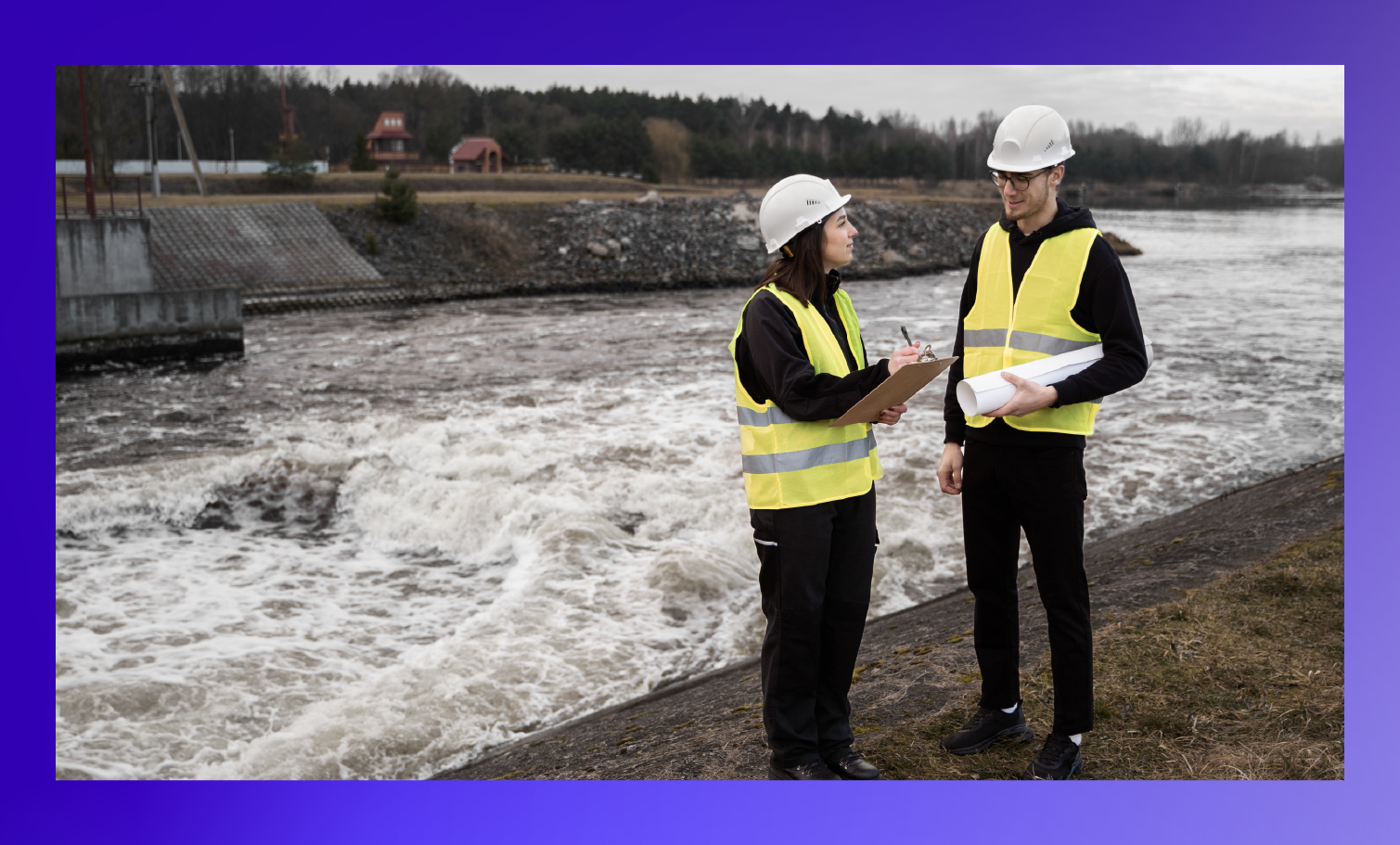
Klir vs. WaterTrax: Picking a Water Management Tool
Municipalities and utilities have turned to electronic reporting tools (ERTs) to streamline, consolidate and automate their water and wastewater data processes for decades.
These tools cut down on lost or duplicate data, provide users with automated alerts, and generally make sampling a much less painful and time-consuming process.
At the same time, water managers know that sampling is just one part of the equation.
No part of a successful water management operation can function in isolation from another—but that’s also precisely what happens when utilities need a different application to manage each aspect of the water process, whether it be water quality or effluent monitoring, permitting, or inspections.
Adopting a truly unified approach to water management might be the only way that municipalities and utilities can protect themselves from another problem: too many tools.
To illustrate how, we’re going to compare two different water sampling solutions today:
Klir
An all-in-one cloud-based water management platform—and more specifically Klir’s sampling capabilities, which delivering fast and up to date sampling and water quality results to decision makers at water and wastewater utilities.
WaterTrax
An electronic reporting tool provided by Aquatic Informatics.
Klir Water Management Software: A Quick Intro
Until recently, the information that operators and managers at water utilities needed to do their jobs was fragmented, dispersed across numerous systems, incomplete, or otherwise difficult to access.
Launched in 2018, Klir is the first system to bring these disparate functions together into one complete SaaS based software suite.
Klir's Drinking Water Management platform allows water quality teams to manage monitoring plans and sampling outcomes against relevant legislation and regulations such as the Safe Drinking Water Act (SDWA). Meanwhile, Klir's Wastewater Management Platform allows treatment plant operators to manage effluent reporting and DMR reports, so they can stay compliant with key regulation such as NPDES (National Pollutant Discharge Elimination System).
Instead of relying on a mishmash of different systems and software, Klir brings the entire team onto one platform and pulls in data from lab reports, LIMS, SCADA & GIS to create a single source of truth for sampling activities utility-wide.
This allows operators to
- See trends across the entire water system—from sampling, to permitting, inspections & more—and make decisions with clarity and confidence.
- Automate manual tasks and data analysis that were once tracked in Excel or Outlook, from scheduling sampling runs, to interpreting sampling results, to generating regulatory reports, eliminating 1+ days of admin work each week.
- Have peace of mind knowing that Klir’s automatic alerts for MCLs, operational limits, and numerous other types of limits will trigger in case anything ever goes wrong, and feel confident that every sample has been completed on time.
WaterTrax: A Brief Overview
WaterTrax was first launched in 2002 with the goal of helping utilities and municipalities detect adverse water quality events earlier and faster, offering quick access to current and historical data, automatic alerts, and a consolidated repository for lab data, all in a web-based system that didn’t require and special hardware or software to run.
Today WaterTrax’s focus is water and wastewater management, and the typical user will use the tool to do three things: set up a sampling schedule, set up their water infrastructure, and begin consuming data from labs and field samples.
In 2017, WaterTrax was acquired by Vancouver’s Aquatic Informatics company, where it exists alongside a family of applications purpose-built for different aspects of the water management process, including:
- Aquarius Samples, an environmental lab and field sample data production tool.
- Linko, an Industrial Pretreatment and FOG solution.
- Tokay, a backflow prevention and cross-connection control tool.
One Platform vs. a Family of Separate Apps
While WaterTrax and the Klir sampling module might have a lot of overlap, the biggest difference between the two is Klir’s unified platform approach to water, as opposed to Aquatic Informatics’ à la carte approach.
While Klir users can move seamlessly from managing water and wastewater processes to other key processes such as permitting, inspections, asset management, and backflow or cross-connections, WaterTrax users are forced to switch to a different Aquatic Informatics application every time.
The Klir system unifies sampling and water monitoring alongside permitting, inspections, asset management, and backflow or cross-connections. This allows utilities to:
Break Down Silos
Reducing contradictory data, enabling constant information sharing across departments and teams, and reducing knowledge-loss during employee retirements or absences.
Spend Less time on Implementation
Klir allows utilities to train multiple teams on a single system and manage multiple process in one central software system.
Work With a Single Source of Truth
As your organization grows and its data needs increase, your ability to create and work from a single point of truth will become increasingly important.
The Klir Water Management Platform in Action
In addition to the benefits of Klir’s platform approach, there are also specific areas where Klir allows utilities to manage sampling and water quality outcomes with ease:

1. Powerful Monitoring Plans and Sample Scheduling
Klir unifies monitoring plans and sample scheduling across the utility, and making those functions available across working groups (whether it be compliance, water quality, operations, or treatment facilities).
Klir is a SaaS-based program that can be securely accessed on any device, anywhere, and is designed with an intuitive user interface so that any delegated user in your organization can set up their monitoring plan, select what they want to monitor against, track sampling outcomes against relevant parameters, and provision their plan with a set of recurring tasks.
2. Better Lab Data Processing
Klir currently provides users with numerous ways of entering data into the system, including:
- Manual frontend data entry
- Frontend data import through the import tool
- SCADA import
- SFTP file transfers
- Sample results APIs (future)
Klir is also developing a sampling API that will expand even further on users’ ability to get data into the Klir system easily.
3. Powerful Customization and Automation Functions
With automatic alerts and notifications triggered by sampling processes, Klir allows operators to create custom rules for almost any process or parameter in their water data management system, making it a powerful automation tool.


Klir vs. WaterTrax: Feature-by-Feature
4. It’s Built for Maximum Accessibility
Unlike most legacy water systems, Klir focuses on providing a user-friendly, intuitive and accessible experience that is designed to be used by anyone within the utility, regardless of experience. Klir makes your systems more transparent, not less, making it the clear choice for readability and ease of use out of the box.
5. One Product, One Vision
Klir is unique among competing water management platforms which because it was built as a unified water management solution from the ground up.
This means Klir allows users to avoid the pitfalls commonly associated with legacy software suites—including duplicate data, overlapping processes, multiple licenses, uneven product development, and lack of cross-app integration—while ensuring that your team can be trained and brought onto a single, unified system.
6. Collaboration and Task Management Tools
Klir allows teams to manage all of their tasks in-app, offering an internal chat and reply functionality, user tagging, and commenting, turning the platform into a single channel for collaboration and project management across the organization.
Meanwhile, legacy water management systems often don’t include internal collaboration or communications tools, forcing teams to come up with their own off-platform solutions (usually email).
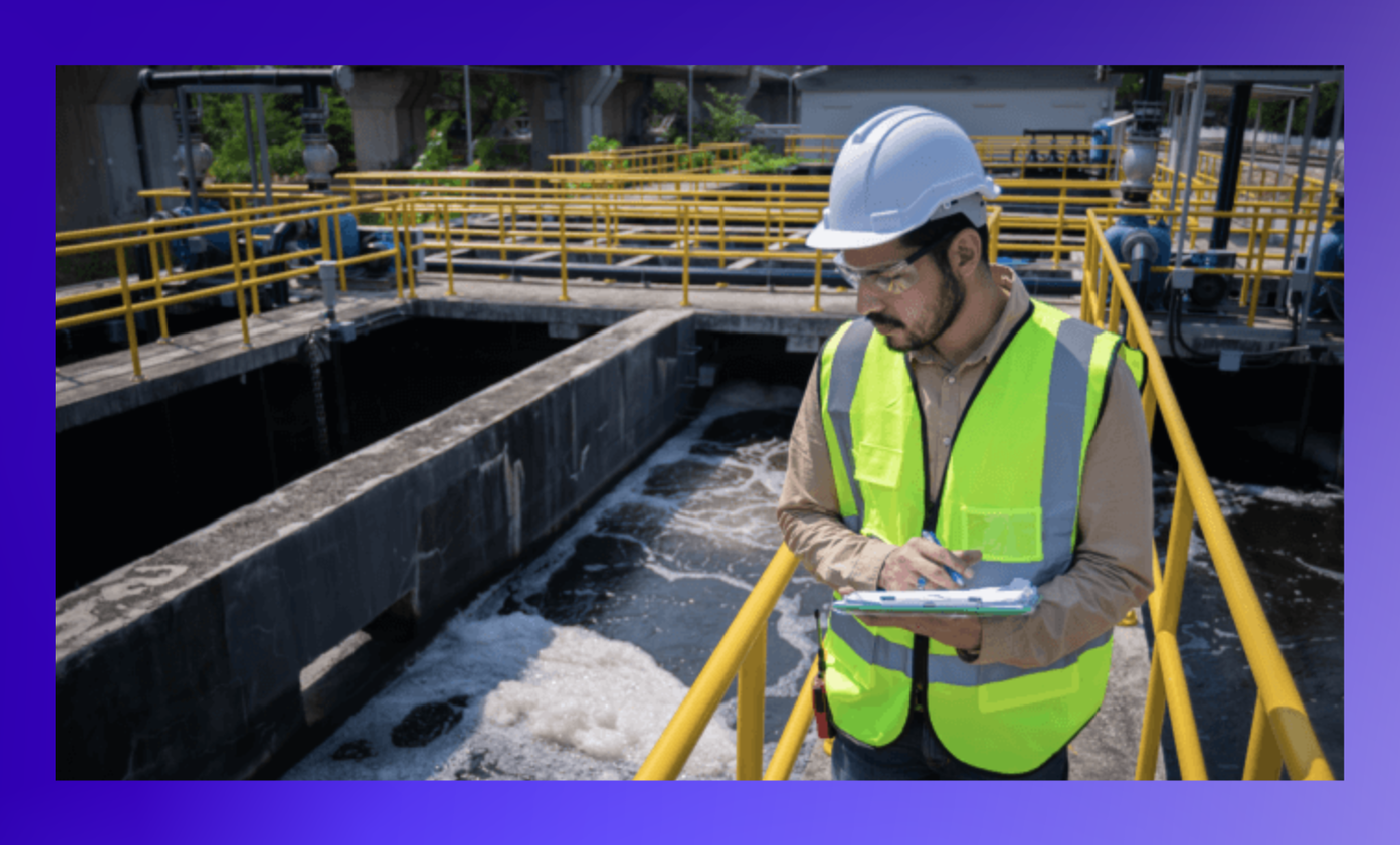
Klir vs. SwiftComply: Choosing an Effective Compliance Tracking Tool
Whether it’s cross connection control, industrial pretreatment, or sampling, tracking regulatory compliance across the different programs and departments at a water and wastewater utility can be a massive undertaking.
Operators need access to a variety of data points to budget, plan for, and manage these challenges effectively, and many have turned to dedicated compliance tracking software to fill the gap.
While these tools are a step up from spreadsheets and post-it notes of the past, they aren’t perfect. Operators looking for a single tool to manage all aspects of compliance might find some of them outdated or limited in functionality.
Today we’re going to explore these tradeoffs by comparing two separate compliance tracking solutions:
Klir
An all-in-one cloud-based operating system for drinking water & wastewater utilities—and more. Klir’s inspection tools help utilities run more effective backflow, FOG and industrial pretreatment programs while cutting down on administration and record-keeping work.
SwiftComply
A compliance management tool offering backflow prevention, FOG management, and industrial pretreatment solutions.
Klir: A Quick Intro
Launched in 2018, Klir is an all-in-one operating system for drinking water & wastewater that brings your entire team onto one platform, pulling in data from lab reports, LIMS, SCADA & GIS to create a single source of truth for compliance utility-wide. This allows operators to:
Work With Trends
See trends across the entire water system—from sampling, to permitting, inspections & more—and make decisions with clarity and confidence.
Use Automation
Automate manual tasks and data analysis that were once tracked in Excel or Outlook, from scheduling sampling runs, to interpreting sampling results, and generating regulatory reports, eliminating 1+ days of admin work each week.
Receive Alerts
Have peace of mind knowing that Klir’s automatic alerts for MCLs and non-compliance will trigger in case anything ever goes wrong, and feel confident that every sample has been completed on time.
SwiftComply: A Quick Intro
Launched in 2016, SwiftComply began as a tool to help utilities manage FOG programs. In 2019, the company acquired XC2, a specialized backflow program management software vendor, which it began to replace with a newer updated tool called SwiftComply Backflow.
Today SwiftComply offers modules for FOG, backflow, and industrial pretreatment, stormwater, and customer management, building on its strengths in FOG and pretreatment and offering users powerful features like real-time compliance data monitoring.
Klir vs. SwiftComply: Which One Is Right for You?
SwiftComply and Klir have a lot of overlap, but there are four big differences between them that are worth keeping in mind when considering whether they’re the right fit for your operation: scope, collaboration, pricing, and data ownership.
1. One Tool For Everything
SwiftComply might work well if you already use it to manage your cross connection control data, and it might also work if you’re a solo operator looking for a tool dedicated to managing your backflow program alone.
But if you’re looking for a truly all-encompassing tool that plugs into the rest of your operation—including sampling, customer management, resource recovery and more—you might consider using a tool like Klir instead.
Klir’s commitment to building one unified platform for water utility management means it avoids the pitfalls commonly associated with legacy software suites—including duplicate data, overlapping processes, multiple licenses, uneven product development, and lack of cross-app integration—while ensuring that your team can be trained and brought onto a single, unified system.
2. Pricing Tailored For Growth
Another major difference between SwiftComply and Klir is pricing: the former follows a usage-based pricing model, whereas Klir offers personalized pricing based on a utility’s needs.
To most operators new to water data management software, a tool like SwiftComply can seem as good as “free.” There are no flat licensing costs, and if a utility does not upload any data to Swiftcomply, they don’t pay anything.
But while the financial barrier to entry might be low, usage based pricing can also work against you, discouraging use of the tool in general.
Going with a predictable, tailored fee like Klir’s means that you can keep a rapidly growing population’s drinking water safe without the surprise of a massive bill.
Klir focuses on enabling the utility to grow with its city, rather than penalizing it. If you’re keen on software that is as easy to use as it is to budget for, consider Klir.
3. Collaboration
SwiftComply provides users real-time data to monitor compliance. But like other legacy systems, it doesn’t include internal collaboration or communications tools, forcing teams to come up with their own off-platform solutions (usually email).
If you’re looking for a tool that does more than just monitoring, especially project management and other automation-enabled collaboration tasks, you should consider Klir instead.
Klir merges multiple data sources and processes into a single collaborative platform and paves the way for a more proactive, collaborative, and resilient water management program. Directors can independently access every aspect of the water management data—including compliance and sampling–with an easy-to-use executive dash dashboard, freeing-up the time of their subordinates and empowering them to get the data they need in an instant.
Klir allows teams to manage all of their tasks within the app, offering an internal chat and reply functionality, user tagging, and commenting, turning the platform into a single channel for collaboration and project management across the organization.
4. Privacy and Data Ownership
As utilities move more of their data from physical logbooks, spreadsheets and calendars into the digital sphere, who exactly has access to—or even outright owns—that data can become murkier.
One big concern for utilities who work with private inspectors and contractors on functions like backflow is ownership over inspection data. With SwiftComply, third-party inspectors own the data that they enter into the system. With Klir, the utility has full ownership of inspector data.
Conclusion
Despite SwiftComply’s strengths in cross connection and FOG program management, Klir’s all-encompassing, user-friendly approach to data management makes it the clear winner for utilities looking to manage all of their programs out of one system.
- Klir’s focus on creating a single source of truth for all of your utility’s programs—from sampling and compliance to industrial pretreatment—provides program managers with the data and confidence they need to make important operational decisions.
- Klir’s straightforward pricing structure makes it easier to budget and doesn’t penalize users for increased usage.
- Klir’s focus on project management and in-app communication also makes it the clear choice for utilities and programs looking for a single tool to encompass all aspects of program management.
Operations And Compliance Management For Everyone
Looking for a simple, straightforward compliance tracking tool that you can use straight out of the box? Learn more about how Klir can cut down on administration and recordkeeping work, create new opportunities for collaboration, and provide a level of system-wide visibility unmatched by other water data management systems.

Klir vs. SAMS by NJBSoft: Picking An Operations and Compliance Management Suite That Works For You
For utilities managing multiple programs like drinking and wastewater, cross connection control, and industrial pretreatment, bringing operational and compliance data from across the organization into one environment can be a big undertaking.
Over the years, numerous engineering, IT consulting, and software companies have developed tools to help utilities manage this process. But while they might be a step up from paper and spreadsheet-based data management, not all operational and compliance management software is created equal.
Today we’re going to explore some of these differences by comparing two platforms:
Klir
An all-in-one cloud-based operating system for water & wastewater utilities. Klir pulls compliance, sampling, reporting and more into an easy to use dashboard, cutting down on administration and record-keeping work while providing a level of organization-wide visibility unmatched by other systems.
SAMS
An operations and compliance management suite from NJBSoft built for managing water, wastewater, industrial pretreatment, backflow, stormwater, air quality and asset management programs.
Klir: A Quick Intro
Until recently, the information that operators and managers at water utilities needed to do their jobs was fragmented, dispersed across numerous systems, incomplete, or otherwise difficult to access.
Launched in 2018, Klir is the first system to bring these disparate functions together into one complete, all-in-one operating system (OS) for water & wastewater utilities.

Instead of relying on a mishmash of different systems and software, Klir brings the entire team onto one platform and pulls in data from lab reports, LIMS, SCADA & GIS to create a single source of truth for sampling activities utility-wide.
This allows operators to:
Work With Trends
See trends across the entire water system—from sampling, to permitting, inspections & more—and make decisions with clarity and confidence.
Use Automation
Automate manual tasks and data analysis that were once tracked in Excel or Outlook, from scheduling sampling runs, to interpreting sampling results, and generating regulatory reports, eliminating 1+ days of admin work each week.
Receive Alerts
Have peace of mind knowing that Klir’s automatic alerts for MCLs and non-compliance will trigger in case anything ever goes wrong, and feel confident that every sample has been completed on time.
SAMS: A Quick Intro
Launched in 2009, NJBSoft’s Sampling and Monitoring System (SAMS) began as an integrated operations and compliance solution for the Civil, Environmental and Municipal Engineering sector.
Today, the company offers seven separate ‘SAMS’ covering different aspects of water utility data management, including:
- Compliance and permit management for drinking and wastewater utilities (SAMS Water and SAMS Wastewater)
- Suites for managing industrial pretreatment (SAMS IPP), cross connection control (SAMS Cross Connection) and stormwater (SAMS Stormwater) programs
- A tool for managing Clean Air Act and other air quality compliance (SAMS Air Quality)
- A new asset management module (SAMS Asset Management)
Klir vs. SAMS: Which One Is Right for You?
While SAMS and Klir might have a lot of overlap, there are three major differences that set the two platforms apart: degree of customizability vs. configurability, how each platform handles data visualization, and collaboration tools. Here’s what each of them means for your utility:
1. Customizability vs. Configurability
Generally speaking, users get the most out of NJBSoft’s SAMS by customizing and changing the tool to fit their specific situation.
Organizations that have substantial IT and computer engineering resources have the ability to make code-level changes to SAMS, which can result in a tool that is closely tailored to a specific utility or department’s data management needs and situation.
Klir’s “click not code” approach to configurability, on the other hand, means that any user can automate processes and manage tasks without the steep learning curve.
While customizable software might offer users a more tailored approach, it’s also more expensive, both from a financial and human resources perspective.
When budgets get tight, the last thing your department needs is to sink thousands of dollars into hiring engineers to customize software you’ve already paid for. Meanwhile, configurable software is cheaper to adapt to your specific needs, and cheaper to maintain.
2. Data Visualization
We can make a similar comparison between the two platforms when it comes to another important function: pulling and synthesizing large amounts of operational and compliance data into easy-to-understand dashboards and reports.
While both platforms offer data visualization, the SAMS platform requires complex, time-consuming queries to pull operational data into dashboards.
Klir’s single-click reporting and dashboard capabilities, on the other hand, are focused on saving time and being as user-friendly as possible. There’s no need for an experienced ‘power user’ to immediately start getting value out of Klir. Powerful out-of-the-box dashboards make data more digestible for everyone, whether you’re a seasoned Klir user or using the platform for the first time.
Pulling data into reports is a similarly painless process. With a single click, operators can generate compliance reports that are instantly ready for submission to state and local regulators.
Overall, Klir’s fully configurable platform offers a simple yet comprehensive solution for all users to set up their dashboards, notifications, and forms, making it easy to visualize important information such as inspection outcomes, compliance status, and sampling results at a glance.
3. Collaboration
SAMS internal collaboration and communications tools are limited, forcing teams to handle most project management work outside of the app. If you’re looking for a tool that prioritizes project management functionality and other automation-enabled collaboration tasks, you should consider Klir instead.
Klir provides a single collaborative platform that paves the way for more proactive, collaborative programs, offering an internal chat and reply functionality, user tagging, and commenting, turning the platform into a single channel for collaboration and project management across the organization.
Conclusion
While SAMS’ operations and compliance management tools might meet the needs of power users with substantial IT and engineering resources, Klir’s out-of-the-box, user-friendly approach makes it the clear favorite for the average program manager.
- Klir’s focus on configurability cuts down on the substantial time and effort users must invest in customizable platforms like SAMS.
- Klir’s intuitive, user-friendly interface and query-free dashboard interface makes it the more powerful tool out-of-the-box. Users with little to no experience using the platform can immediately start creating data visualizations and generating reports for regulators.
- Klir’s focus on project management and in-app communication also makes it the clear choice for utilities and programs looking for a single tool to encompass all aspects of program management.
- Klir is committed to providing your utility with continued personalized support throughout your entire journey, including a dedicated Klir Customer Success Manager and a comprehensive change management plan to make the transition as seamless as possible.
Operations And Compliance Management For Everyone
Interested in learning how to get configurable dashboards without a computer science degree? Learn more about how Klir can cut down on administration and recordkeeping work, create new opportunities for collaboration, and provide a level of system-wide visibility unmatched by other water data management systems.

Klir vs. Hach WIMS: Choosing a Water Data Management Platform That Makes Sense for You
Whether it’s pathogens, PFAS, flood, drought, or a host of other factors, successful water management comes with a gauntlet of complex and interlinking challenges—and that list is only growing.
To tackle these issues, water and wastewater managers, operators and engineers need a steady stream of easy to access and up to date information related to planning, compliance, risk, sampling results, and numerous other data points. Enterprise and custom-built industrial automations systems have promised to provide exactly that, but haven’t always delivered.
Most operators today continue to work in water data management environments that are incomplete: crucial data remains siloed and underutilized, plant operators continue to struggle with sub-optimal conditions for planning, and adopting a data-based approach to water management continues to be a challenge.
To explore the tradeoffs and sticking points operators face when approaching these challenges, we’re going to look at two different systems today:
Klir
An all-in-one cloud-based operating system for water & wastewater utilities—and more. Klir’s sampling module focuses on delivering fast and up to date water quality results and analysis, and simplifying scheduling and reporting for water monitoring plans across the utility.
Hach WIMS
A water information management solution developed by the Hach Company to complement the company’s water quality testing instruments and processes.
Klir OS and the Klir Sampling Module: A Quick Intro
Until recently, the information that operators and managers at water utilities needed to do their jobs was fragmented, dispersed across numerous systems, incomplete, or otherwise difficult to access.
Launched in 2018, Klir is the first system to bring these disparate functions together into one complete, all-in-one operating system (OS) for water & wastewater utilities.

Instead of relying on a mishmash of different systems and software, Klir brings the entire team onto one platform and pulls in data from lab reports, LIMS, SCADA & GIS to create a single source of truth for sampling activities utility-wide.
This allows operators to:
Work With Trends
See trends across the entire water system—from sampling, to permitting, inspections & more—and make decisions with clarity and confidence.
Use Automation
Automate manual tasks and data analysis that were once tracked in Excel or Outlook, from scheduling sampling runs, to interpreting sampling results, and generating regulatory reports, eliminating 1+ days of admin work each week.
Receive Alerts
Have peace of mind knowing that Klir’s automatic alerts for MCLs and non-compliance will trigger in case anything ever goes wrong, and feel confident that every sample has been completed on time.
Hach WIMS: A Quick Intro
Hach WIMS allows operators and managers to synthesize and analyze together water quality data using queries, charts and custom analytics. Think of it as a powerful version of Excel, custom-built for water.
Although Hach WIMS has been a mainstay in the water industry, it hasn’t received any major overhauls since it was originally introduced, making it very much a product of its time. While it’s helpful for users focused on managing sampling results & interpreting water quality data, it lacks some of the broader functionalities users have come to expect from newer cloud-based software.
Klir vs. Hach: Which One is Right for You?
There are a few key factors that operators need to keep in mind when choosing a system that is right for them. We’ll break them down for you below and sort them into two sections: one for operators that would be better off choosing Klir, and one for operators who might benefit from sticking to Hach.
Klir is an all-in-one system that captures all data for compliance with regulatory and local limits, and is built to handle:
- Monitoring plan creation & management
- Sample scheduling
- SCADA & LIMS import / review
- Rule validation
- Exceedance warnings
- Reporting
- Task management
- Live data entry for field sampling
Hach WIMS, on the other hand, is meant to support engineers during their daily operations and is built to handle:
- Sampling scheduling
- SCADA & LIMS import / review
- Reporting
- Equipment maintenance support
- Plant operational workflows
Reasons to choose Klir
1. It’s a Truly Comprehensive System
It used to be that if you wanted a truly comprehensive, all-encompassing view of your organization, you had to wait for an annual report. Klir has changed that by providing operators with a complete view of the organization, allowing them to:
- Know they’re compliant, rather than assume it
- Consult a single dashboard of relevant internal and regulatory compliance when they log-in
- Avoid hunting for information across segments of data in different systems
2. It’s Bulletproof
Cybersecurity is one of the biggest threats for utilities, but these attacks often rely on very boring, unremarkable vulnerabilities. Many are simply the result of over-reliance on outdated software on local devices, or trying to integrate disparate software and systems.
IT leaders within utilities are increasingly setting mandates to reduce the complexity of their stack and are demanding higher security for the applications they choose to keep onboard. Klir provides customers with a little to no integration-required platform that operates with military-grade security.
Klir is cloud-based and can be securely accessed from any device, anywhere, offering your employees and IT managers a safe, secure and bulletproof environment to work in.
3. Maximum Accessibility
Klir focuses on providing a user-friendly, intuitive and accessible experience that is designed to be accessed and used by anyone within the utility, regardless of experience. No need to write queries or build custom dashboards: Klir makes your systems more transparent, rather than less.
Hach and other legacy industrial automation systems are built with the expert user in mind. Intuitive UI, accessibility and readability aren’t a priority in the design of these systems, which means that only water quality experts with advanced analytics knowledge and experience writing queries can get full value out of the system.
4. Built for Focused Collaboration and Task Management
Hach and other legacy systems usually don’t include internal collaboration or communications tools, forcing teams to come up with their own off-platform solutions (usually email).
While Hach focuses primarily on data management and manipulation, Klir allows teams to manage all of their tasks in-app, offering an internal chat and reply functionality, user tagging, and commenting within individual tasks, turning the platform into a single channel for collaboration across the organization.
5. Build Institutional Knowledge Instead of Individual Knowledge
Systems that require specialized expert knowledge often struggle with information ‘siloing’: when one person is out of the office or retires, they often leave a big information gap that can leave work at a standstill.
Klir fixes this problem by offering users a single source of truth that is accessible to everyone in the organization, allowing utilities to be more nimble and responsive.
Reasons Why You Might Choose Hach
While Klir might be the clear choice for operators and managers looking for an all-in-one solution to all of their water information management needs, you might be better sticking with Hach in the following cases:
1. You Prefer a More Hands-On Approach to Analytics
Klir customers appreciate the simplicity of the tool and the ability it gives them to simply get on with their workday: from task management to automated analytics.
Hach comes with a much more customizable analytics toolbox that involves a lot more up-front work. Building your own dashboard can be a challenge, but once you do, the customizability Hach offers starts to pay off down the road with super-granular insight.
All this is to say, if you’d prefer a system that focuses primarily on data integration and custom analyses on that data, you might prefer Hach.
- Know they’re compliant, rather than assume it
- Consult a single dashboard of relevant internal and regulatory compliance when they log-in
- Avoid hunting for information across segments of data in different systems
2. You're Focused on LIMS Integration and Custom Analytics
Hach is super focused on allowing users to build detailed and robust dashboards that are deeply customizable and data-driven.
If you’re less focused on the overall operations of your facility and are focused on choosing a system that best integrates with your existing laboratory information management system (LIMS) and provides this level of customization, Hach might also fit the bill.
How Klir Can Help
Klir is a single, unified operating system for water, pulling every aspect of wastewater management—including compliance, sampling and more—into an easy to use dashboard. Learn more about how Klir can cut down on administration and record-keeping work, create new opportunities for collaboration, and provide a level of system-wide visibility unmatched by other water data management systems.
